
SUSTAIN
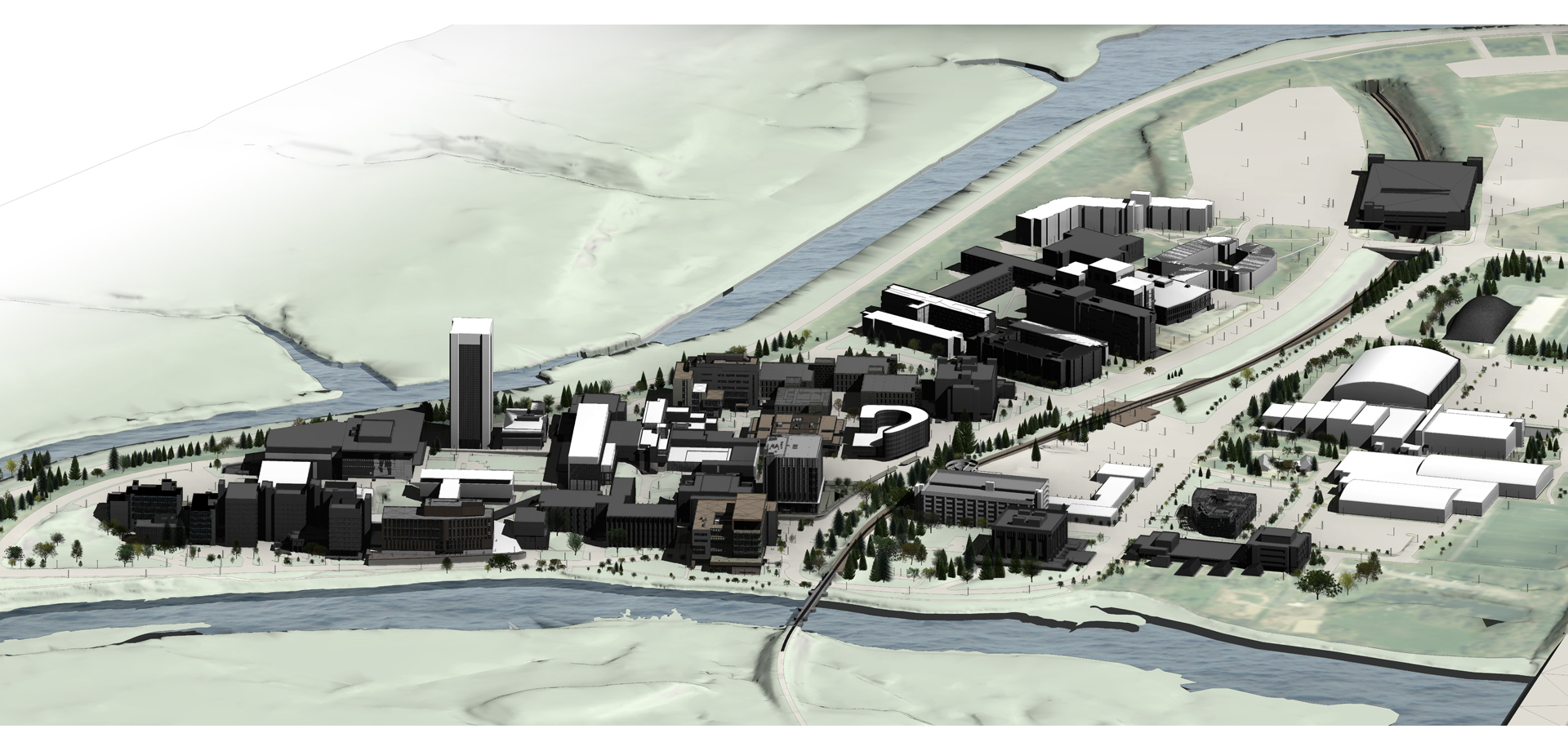
In 2014, CIMS initiated the Digital Campus Innovation (DCI) project that examined integrating Building Performance Simulation (BPS) technologies with BIM on a campus scale. Over the next four years, the multi-disciplinary team – including industry partner Autodesk Research, our colleague Professor Liam O’Brien and students from various units within the Faculty of Engineering and Design – produced a model of the Carleton University campus. The model is being used to analyze building and campus performance. The project has resulted in several academic papers that demonstrate BIM as an valuable technology that can be used to improve the quality of indoor environments, reduce energy costs, and has a potential application for asset management.
Again in partnership with Autodesk, the DCI project recently received a second round of funding from the NSERC Strategic Partnership Program. Phase II that will unfold over the next three years (Gabriel Wainer PI; Fai/O’Brien co-ap).
The SUSTAIN project will define and develop new methods for the integration of real-time sensor data, occupancy information based on advanced wearable sensors and occupants' portable devices (and the buildings networks). These data will be combined with parametric information from the building to construct formal models that can be used for both simulation and control. The formal models will provide analytic results that will be then be used for a variety of simulations and later deployed in advanced 3D BIM visualization environments (at the building and campus levels). The project will conduct real experimentation in the four test buildings at Carleton University. The results will be used by Autodesk Research in their BIM tools to allow Architecture, Engineering, Construction, and Operations (AECO) professionals to analyze real-time data and visualize the modeling results and the analysis results into their actual designs, improving the overall process.