Loading content…

Loading content…
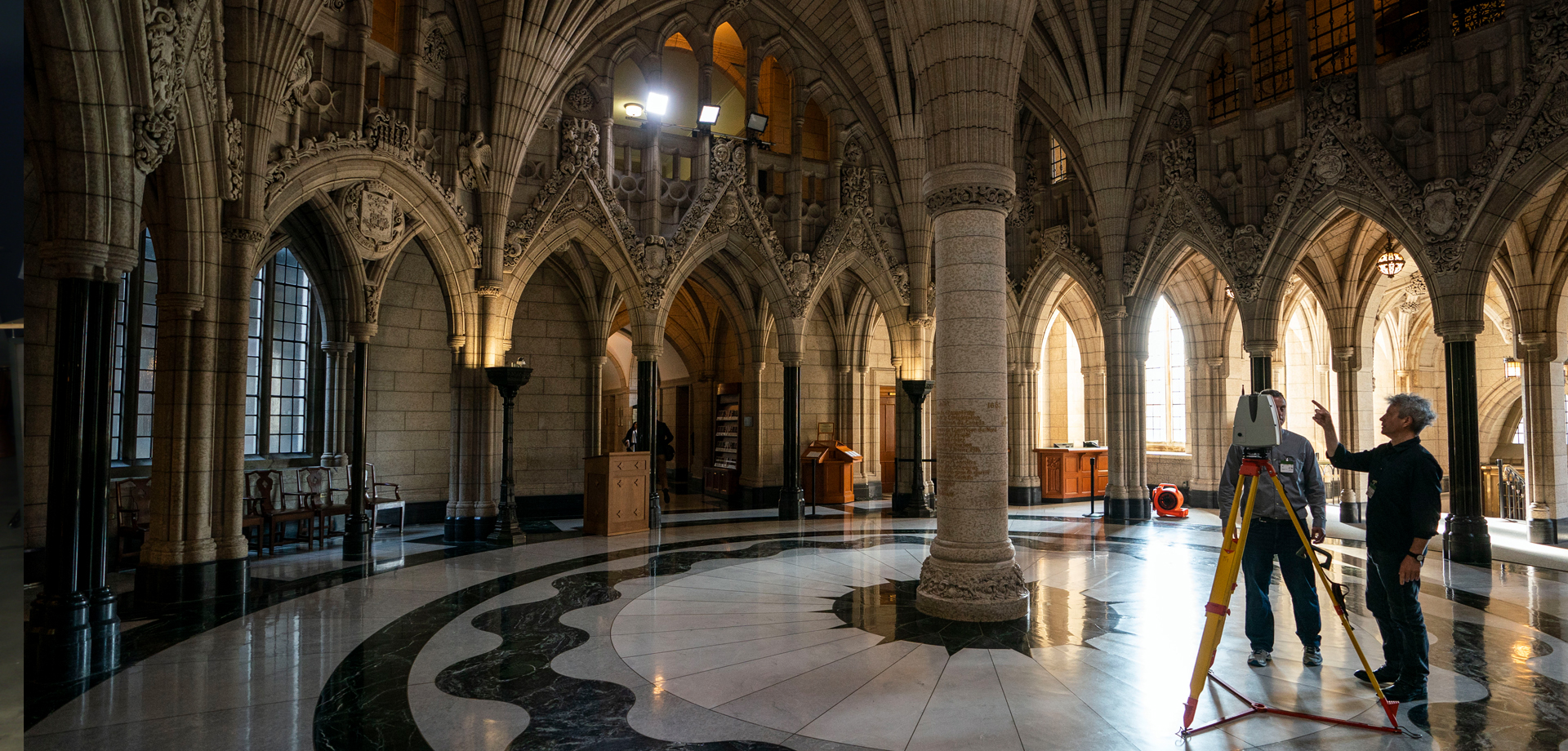
The Carleton Immersive Media Studio (CIMS) is a Carleton University Research Centre (CURC) affiliated with the Azrieli School of Architecture and Urbanism in the Faculty of Engineering and Design. Over the past decade, CIMS has built an international reputation working with public, private, and not-for-profit partners. Our diverse portfolio demonstrates the value of new and emerging digital technologies for architectural rehabilitation, heritage conservation, and the Architecture, Engineering, Construction, and Operations (AECO) industry more generally. We also welcome opportunities to work with partners outside of the AECO.
As noted in the professional journal, Canadian Architect (October 2014), the research agenda at CIMS is unique among academic institutions in Canada. Further, our leadership in the integration of digital workflows within traditionally analogue practices has been acknowledged by peer review through two fully funded tri-council training programs — “New Paradigm / New Tools for Architectural Heritage in Canada” (SSHRC Partnership 2015 – 2022) and Heritage Engineering (NSERC CREATE 2015 – 2021).
CIMS is involved in four streams of inquiry: Digitization, Modelling, Digitally Assisted Fabrication, and Digitally Assisted Storytelling. These diverse research interests have cultivated a multi-disciplinary team. Currently, research associates and assistants — post-doctoral fellows to undergraduates — are trained in a range of disciplines including: architecture, computer science, engineering, human–computer interaction, public history, and information technology. This diversity and commitment to multidisciplinarity has created a unique research and training environment that is conducive to imagination, innovation, and a comprehensive research education.
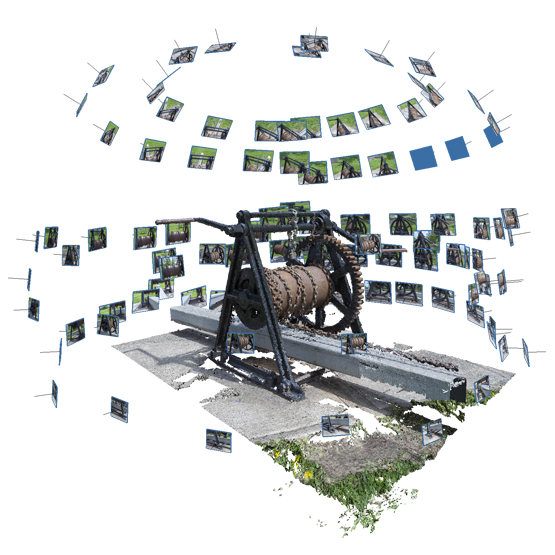
Our digitization research focuses on the accurate recording of the material world into X,Y,Z co-ordinates and/or RGB values using terrestrial laser scanning, photogrammetry, and 360 photography and video. Over the past decade, CIMS has recorded more than ten terabytes of georeferenced point cloud using terrestrial laser scanning and photogrammetry. We capture both interior and exterior environments at level of detail that are appropriate for the unique demands of each project. Our projects range in scale from one-room prairie churches to national (Parliament Hill) and world (Rideau Canal) heritage sites. Our expertise in the digitization of existing conditions has been leveraged for infrastructure management, architectural rehabilitation, and heritage conservation including the generation of building information models, high fidelity meshes of heritage assets for digitally assisted fabrication, and public outreach material.
View Digitization Projects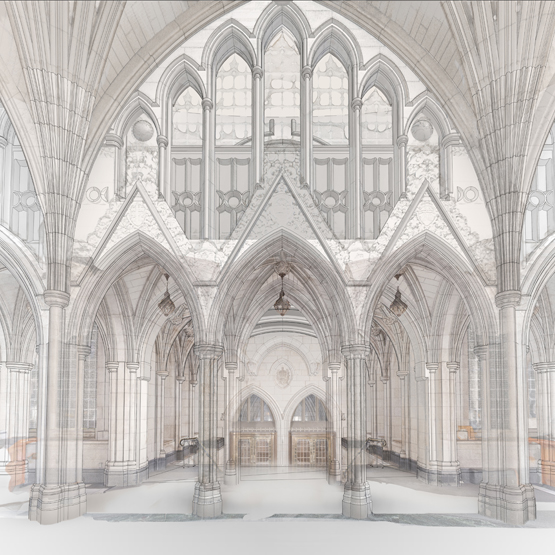
Our team is experienced in modelling existing conditions and integrating digital assets from diverse datasets at multiple scales—objects, buildings, intra-urban districts, cities, and inter-urban regions. We have a multi-scale and typologically diverse record of modelling from the human body for forensic evidence modelling, to one-room prairie churches and campus Building Information Models, and large-scale urban models of Eastern Ontario covering over 44,000 square kilometers.
Most notably, CIMS has played a key role in the research and innovation of Building Information Modelling (BIM) for existing conditions and heritage buildings. Using various documentation methods, CIMS has developed an approach to digitization and 3D modelling of heritage structures, pioneering their integration with the architectural field of BIM. All of our best practices for BIM are documented in an extensive library of protocols that we share directly with industry, academic, and governmental partners and through knowledge mobilization events – conferences, seminars, blog posts, and workshops.
View Modelling Projects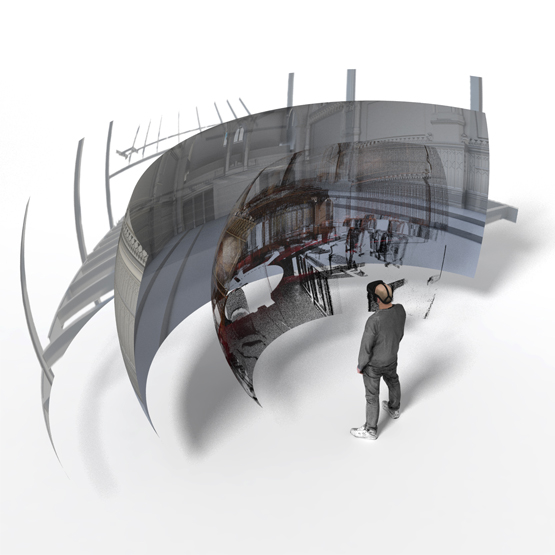
Our digitally assisted storytelling (DAS) research leverages processes and assets from the digitization, BIM, digitally assisted fabrication, and simulation research to create engaging narratives for public dissemination through online, mobile, and on-site exhibitions.
CIMS’ DAS research began in 2010 when CIMS partnered with the MacOrdum Library at Carleton University, the Bytown Museum, and the Canadian Heritage Information Network to develop a virtual exhibit called “Heritage Passages”. The exhibit addressed the relationship between the building of the Rideau Canal and the transformation of Ottawa from a Lumber town to a city. Since then our DAS research has grown significantly, developing several online tours, websites, and virtual and augmented reality experiences.
We credit the expansion of the DAS research to the truly multi-disciplinary nature of the lab. This synergy has led to virtual tours and VR experiences that contain engaging narratives, well-designed content, and functional interfaces.
View Digitally Assisted Storytelling Projects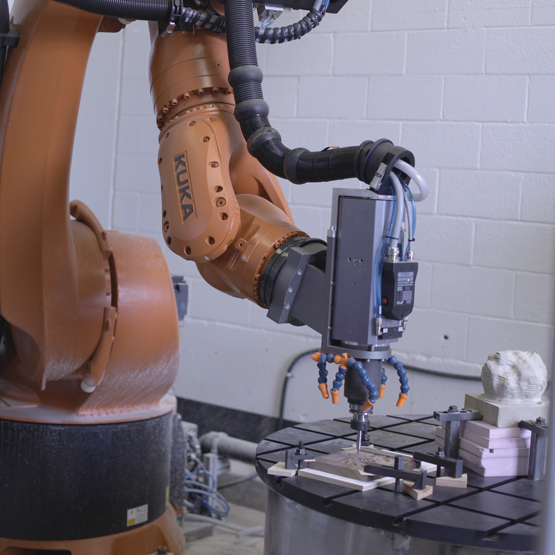
Since 2013, the course of CIMS computer-aided manufacturing research has greatly evolved and it is now one of our four main areas of inquiry – digitally assisted fabrication (DAF). Our DAF research aims to develop a process that augments traditional craft workflows with digital technologies. Early projects included the digitization and fabrication of architectural assets on Parliament Hill - column capital (3D printing), tympanum (3-axis CNC), and owl sandstone relief (off-site robotic mill). In 2016, we purchased two, seven axis robots – the Kuka KR360 and the KR6. These robots have been used to work with traditional craftspeople, including the Dominion Sculpture Phil White, on several projects including developing a scaled mould to cast the Canada Coat of Arms, digital fabrication files of decorative elements for the Senate of Canada (maple leaves), and fabricated elements for the Senate of Canada (provincial crests and flags).
As one of the only robotic systems of its kind at an academic institution in Canada, it has gained a lot of attention leading to multiple speaking and media events. All of our best practices for CAM are documented in an extensive library of protocols that we share directly with industry, academic, and governmental partners and through knowledge mobilization events – conferences, seminars, blog posts, and workshops.
View Digitally Assisted Fabrication Projects