
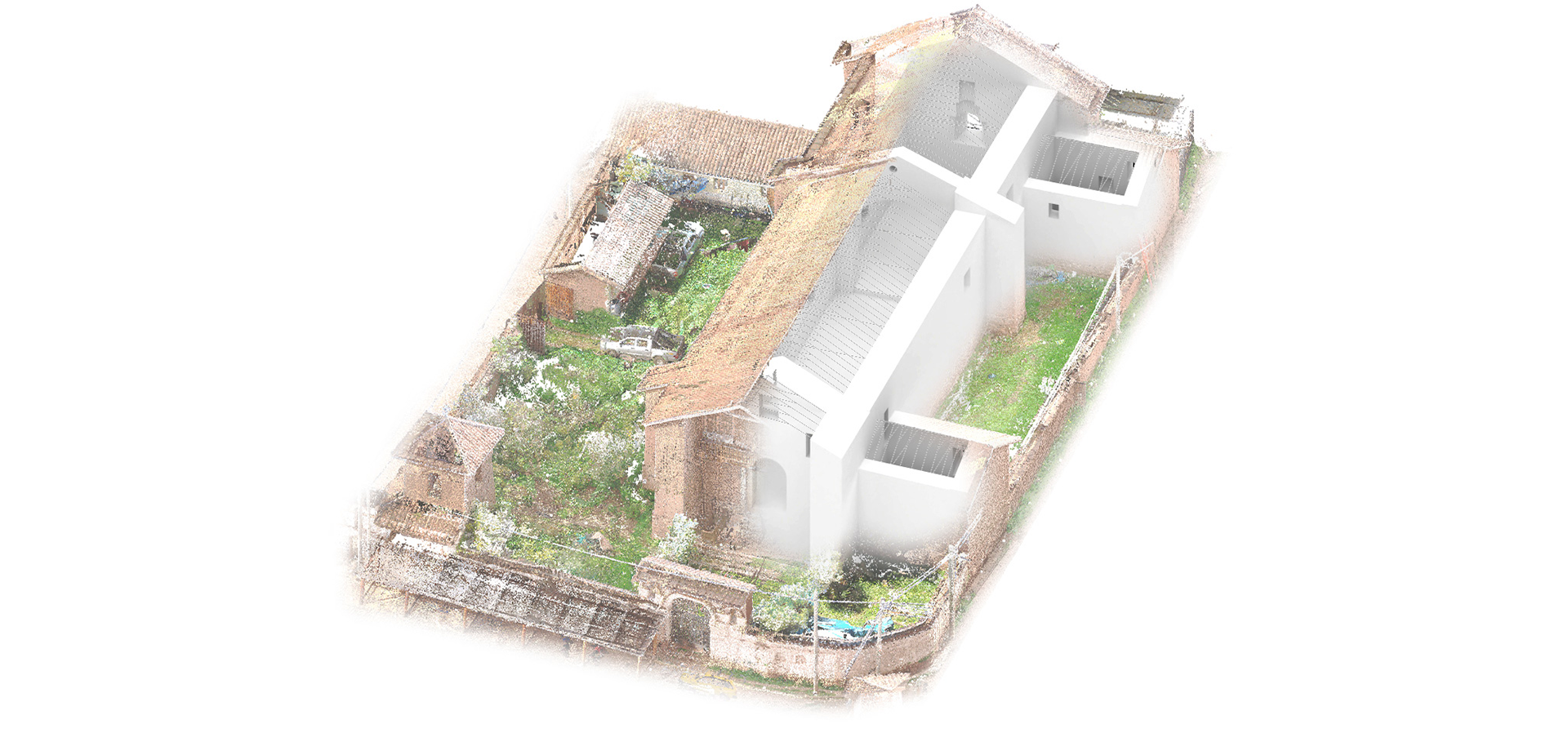
Church of Rondocan and Peruvian Sites Documentation
The Church of Rondocan and Peruvian Sites Documentation Project is part of the Getty Conservation Institute’s (GCI) Seismic Retrofitting Project (SRP), within their Earthen Architecture Initiative. The Carleton Immersive Media Studio (CIMS) has been contributing to the documentation of sites of earthen architecture through the GCI SRP since 2013, with previous documentation works on the church of Santiago Apostol of Kuñotambo. This multi-year project focused on the documentation of four sites in the province of Cusco in Perú: the Church of Santo Tomás de Aquino in Rondocan, the Molino de San Cristóbal and the Molino de La Creación in Acomayo, and the Chapter Hall of Santa Catalina Monastery in Cusco. The work was conducted in collaboration with the GCI and the Dirección Desconcentrada de Cultura de Cusco (DDCC), Ministerio de Cultura de Perú. The documented sites represent architectural and artistic features from the province of Cusco dating to the 17th and 19th centuries, which are of interest for the conservation of their cultural heritage. The objective of the campaign was to provide a record of the existing state of conservation of these sites, to support the ongoing conservation, investigation, and understanding of their earthen architecture and the cultural heritage value of the artistic mural paintings that are present in these sites. A combined recording approach of surveying, terrestrial laser scanning, and aerial, terrestrial, and panoramic photography was employed to produce the following documentation of the sites, including: solid models of the Church of Rondocan buildings for seismic analysis, architectural line drawings, and ortho-corrected images of the decorated surfaces throughout the four sites. For more information, see the Getty Conservation Institute’s ongoing work on the Seismic Retrofitting Project.