
Photogrammetry of the Artifacts in the Senate Tour
Last week, we talked about photogrammetry in general terms, showing examples of aerial, terrestrial, and object documentation of the Rideau Locks Station. Carleton Immersive Media Studio uses photogrammetry for all types of documentation, such as complete temples and sacred spaces like those in Colombia, Paphos, and Myanmar. We also use it for the documentation of small artifacts, such as those seen in the Senate Virtual Tour.

As discussed in previous posts, the Senate Virtual Tour was created by CIMS for Senate Communications who wanted a way to share the red chamber with the public during the rehabilitation project of the Centre Block of Canada. The Senate Virtual Tour is a high quality, augmented panoramic virtual tour of the Senate spaces, including the chamber, ante-chamber, foyer, the Salon de la Francophonie, East and West Corridors, upper gallery, and the chamber of the Speaker of the Senate. It offers navigation through high resolution 360 views, with clickable hotspots allowing exploration of the architectural and design details of these spaces through text, images, and 3D animations. Many of the hotspots include a photogrammetric model of the identified artifact, carefully captured, processed, and animated.

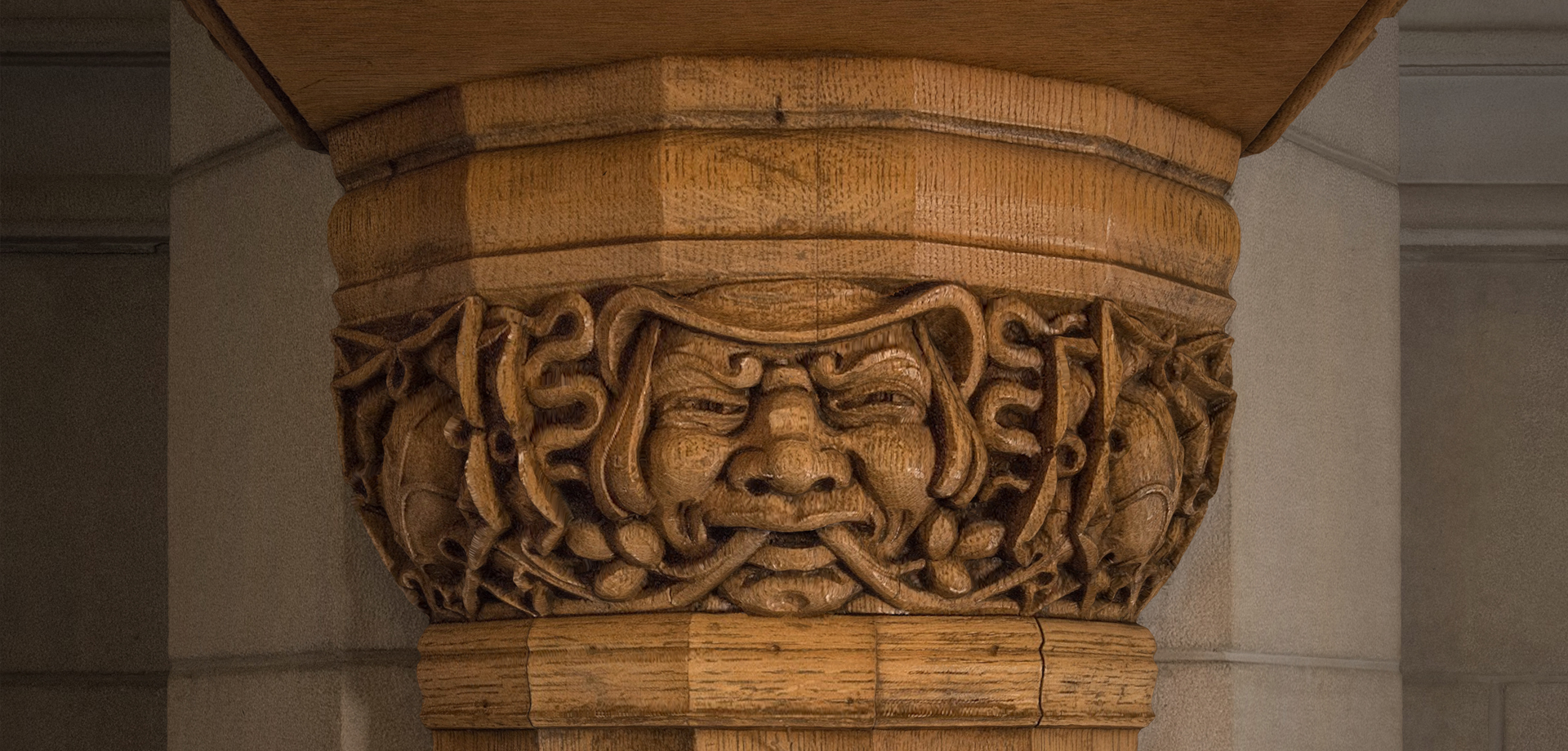
The photogrammetric models in the Senate Virtual Tour make the tour more dynamic and engaging – pulling out small artifacts hidden in the architectural detailing of the space. Photogrammetry allowed us to create digital copies of the tiniest wood carving details and entire sections of a space, such as the photogrammetric model of a section of carved wood wall panelling in the Salon de la Francophonie. The processed mesh is animated in Autodesk 3DsMax and inserted into the hotspot as an animation, showing all sides of the artifact.
<video src="//videos.ctfassets.net/ujrjk97g2nk9/6TsfPI671Dk3fOOPBDWlXD/95ae1355c7aef8ebaa670c8adb667ef0/ALCOVES_WEB.mp4" controls type="video/mov"> </video>Careful selection of equipment before documenting is required to ensure that the captured data is adequate for creating a photogrammetric model. External lights are needed to illuminate the artifacts, removing all shadows evenly. For artifacts on the walls or along the ceiling, a ladder is often required to ensure the top surfaces are captured. Extremely small objects will require a special lens called a macro lens for documentation. The carved wood medallions in the Salon de la Francophonie and the chamber of the Speaker of the Senate, nicknamed “tiny faces,” are approximately one to two centimetres in diameter. A macro lens allowed us to capture their tiny details in our 3D model. It may look as if it were a large object due to the resolution; however, they are a small hidden piece within a larger wood ornament.

Photogrammetry creates a highly detailed and accurate model of documented artifacts. These models can be used as a heritage record and for public outreach. Stay tuned in the following weeks to learn about unique a project that uses underwater photogrammetry and how the data can be used in virtual reality.