Designing the 2019 CanBIM trophies
 Last year at the 4th annual CanBIM awards, the Carleton Immersive Media Studio (CIMS) in partnership with Public Services and Procurement Canada PWGSC, showcased the heritage building information model of the Library of Parliament LOP BIM. This project resulted in CIMS winning two awards, the 2018 CanBIM Academic Award and the Best in Innovation Award. In addition to this achievement CIMS also accepted responsibility of designing the trophies for the following year. This summer CIMS collaborated with Dialog, the designers of the 2017 trophy DIALOG, to create an award that represented innovation in technology and design for Canadian building information modelling.
Before developing a preliminary design, the team looked at previous trophies CanBIM Awards and the CanBIM award vision to help establish a concept to direct the design approach. How could the innovative technologies and skills that CIMS features in their work be implemented in both the composition and construction of the award?
DESIGN CONSIDERATIONS
First, the team decided that using the robot for digitally assisted fabrication was necessary. The unique abilities of the Kuka can enable new forms of carving that have yet to be explored.
Also, integrating some type of tribute to Canada was an important feature to recognize CanBIM as a Canadian collective. This could manifest in the materials used such as maple, or using maple leaves as a motif. Lastly, the final form needed to represent the amalgamation of parts coming together to form a cohesive whole, mimicking the way BIM bring together multidisciplinary teams. Some practical requirements that needed to be considered were the final size and weight of the trophy, as well as the nameplate type and placement.
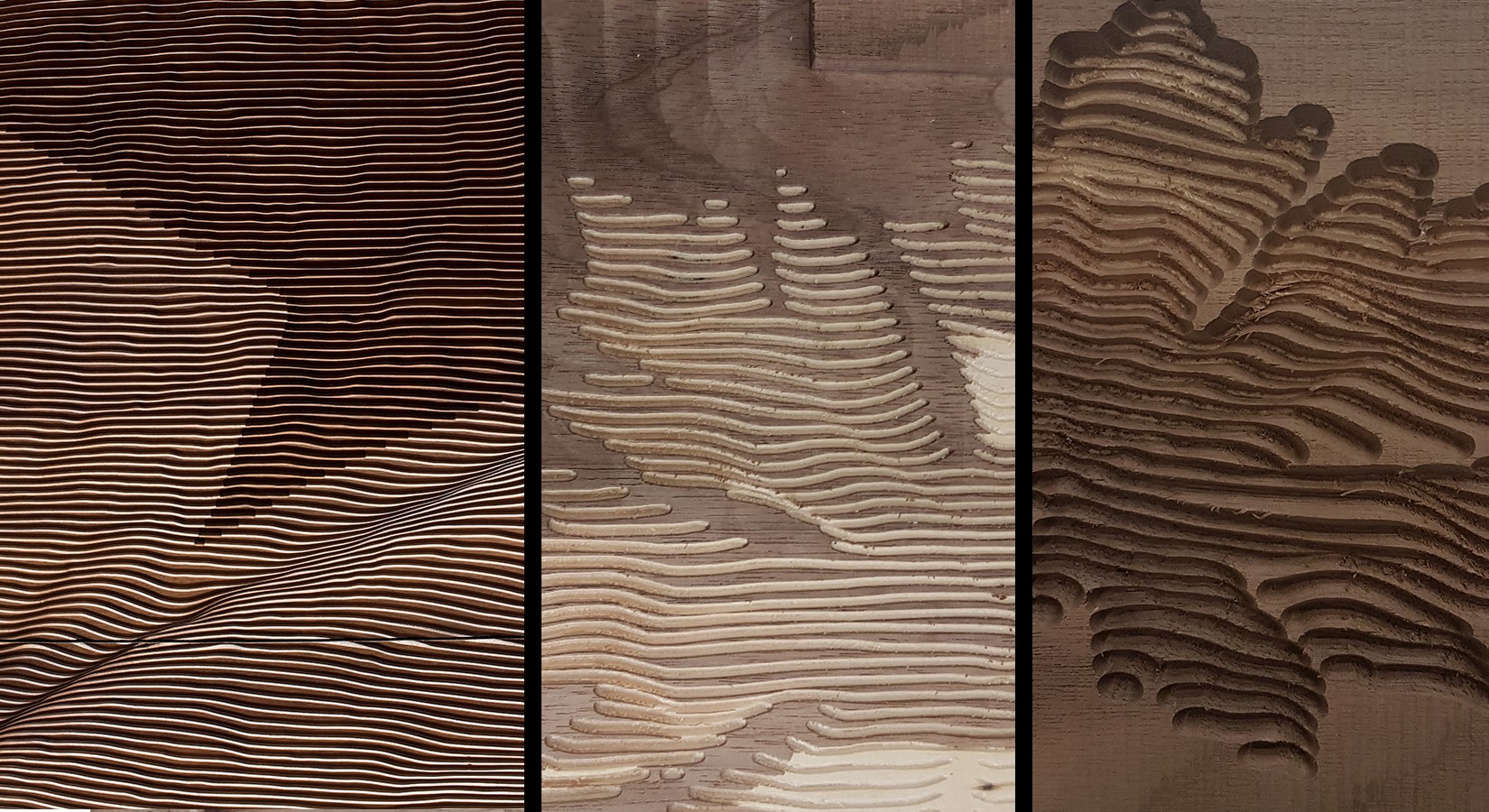
CIMS proposed three themes that met this criteria: wood joinery, expressed toolpaths, and subtractive reveals.
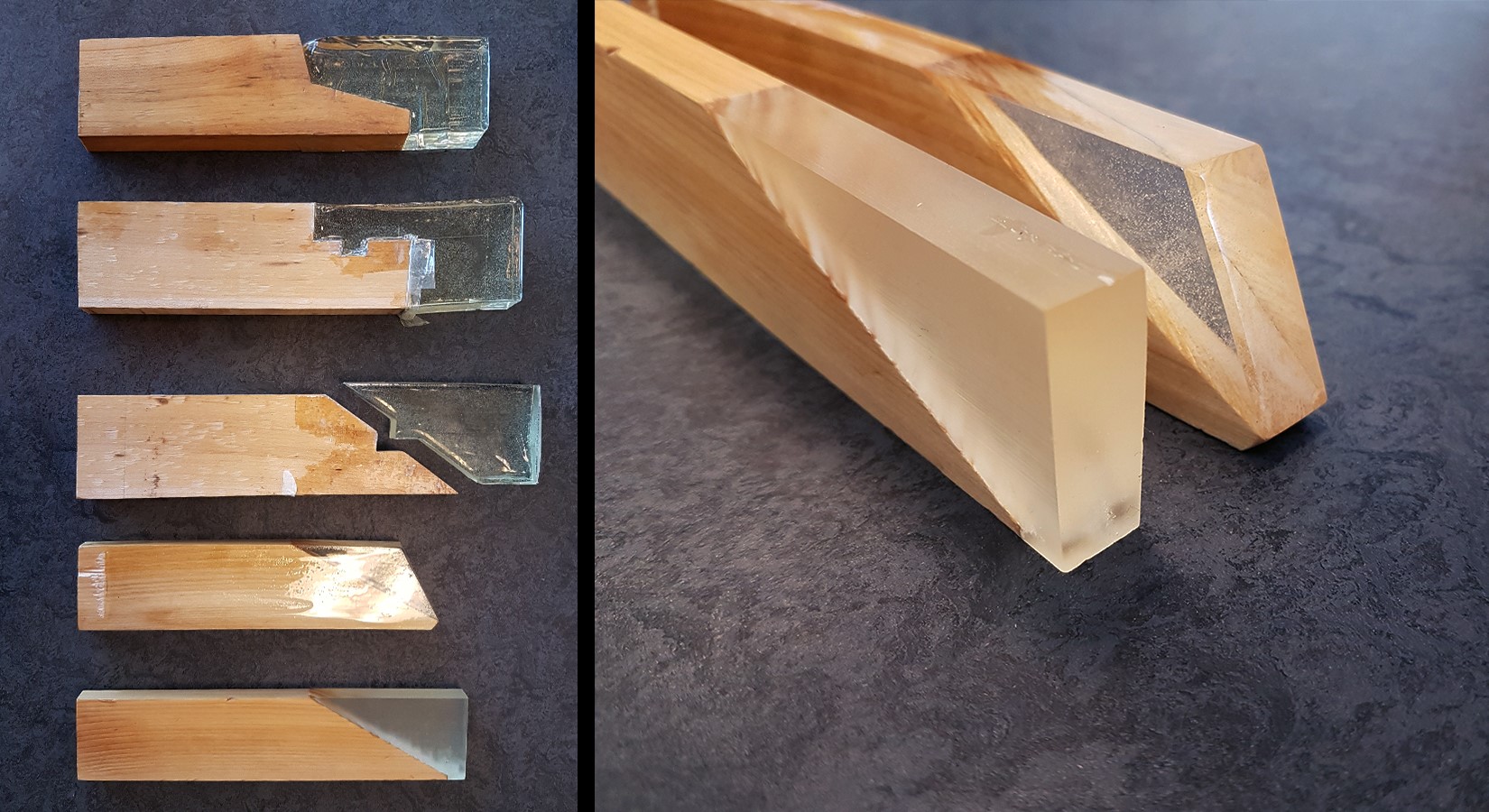
WOOD JOINERY To show at the assembly of parts coming together as whole, a keyed wood joint was proposed. Using a 2 different wood species, two pieces would come together to be locked with a contrasting key. Prototypes using resin were also produced to test the appearance and function of a transparent material. This would expose the details of the joint enabling design options such as the recipient’s name being engraved in the key.


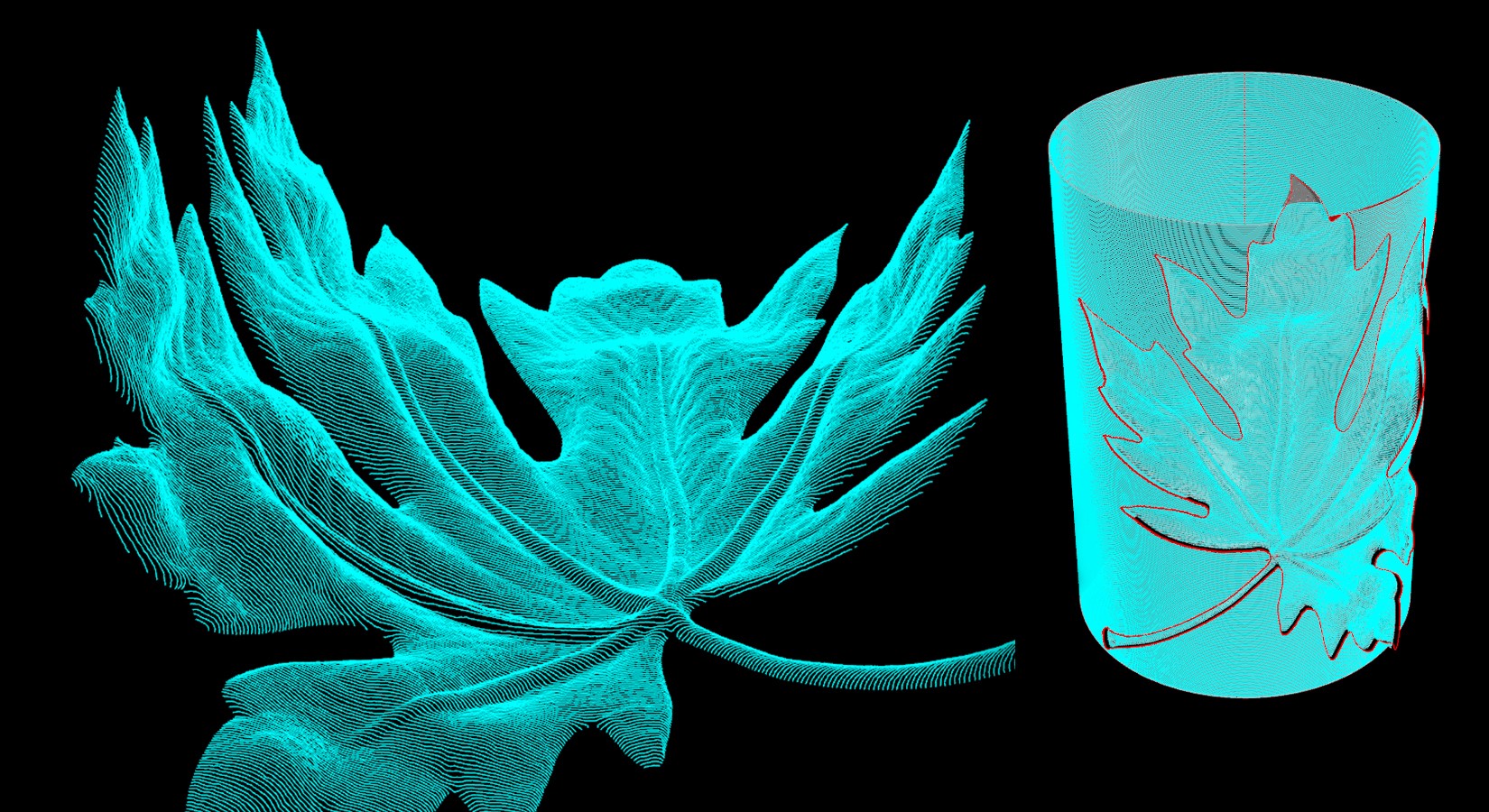
EXPRESSED TOOLPATHS Using the patterns produced by the milling process, the grooves of the tool path can be used as an aesthetic feature. Inspiration was derived from the Canadian flag generated by CIMS for the Senate of Canada. By cutting v-groove lines of different depths, the illusion of a waving flag was created in walnut. Similarly, a maple leaf could be expressed in lines to build form and texture.
SUBTRACTIVE REVEALS Toolpaths can also be used to cut through layers of material to reveal those hidden underneath. Sandwiching contrasting woods or wood with resin can create interesting effects by accentuating the milled lines. Tests were made with walnut over poplar.
FINAL DESIGN
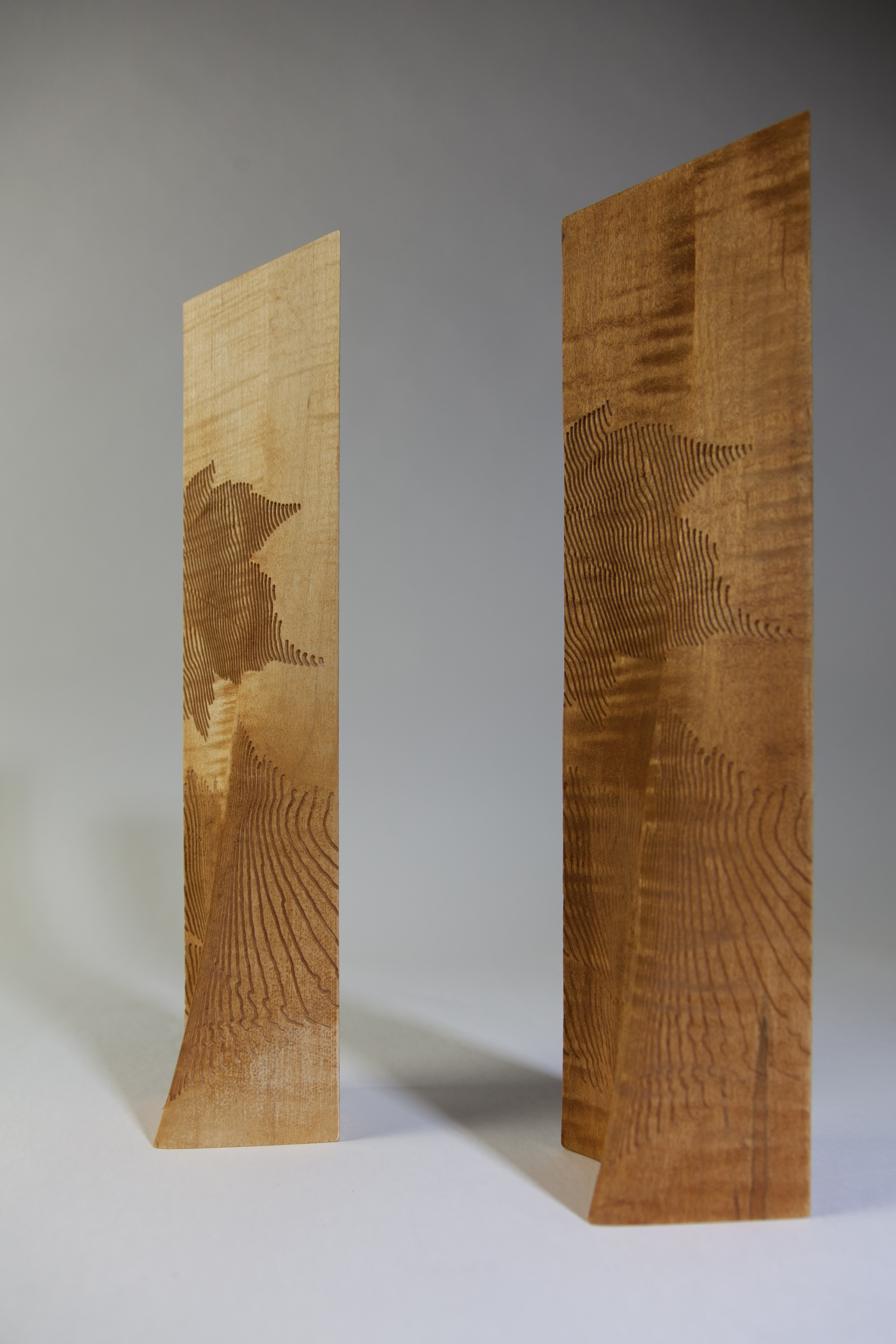
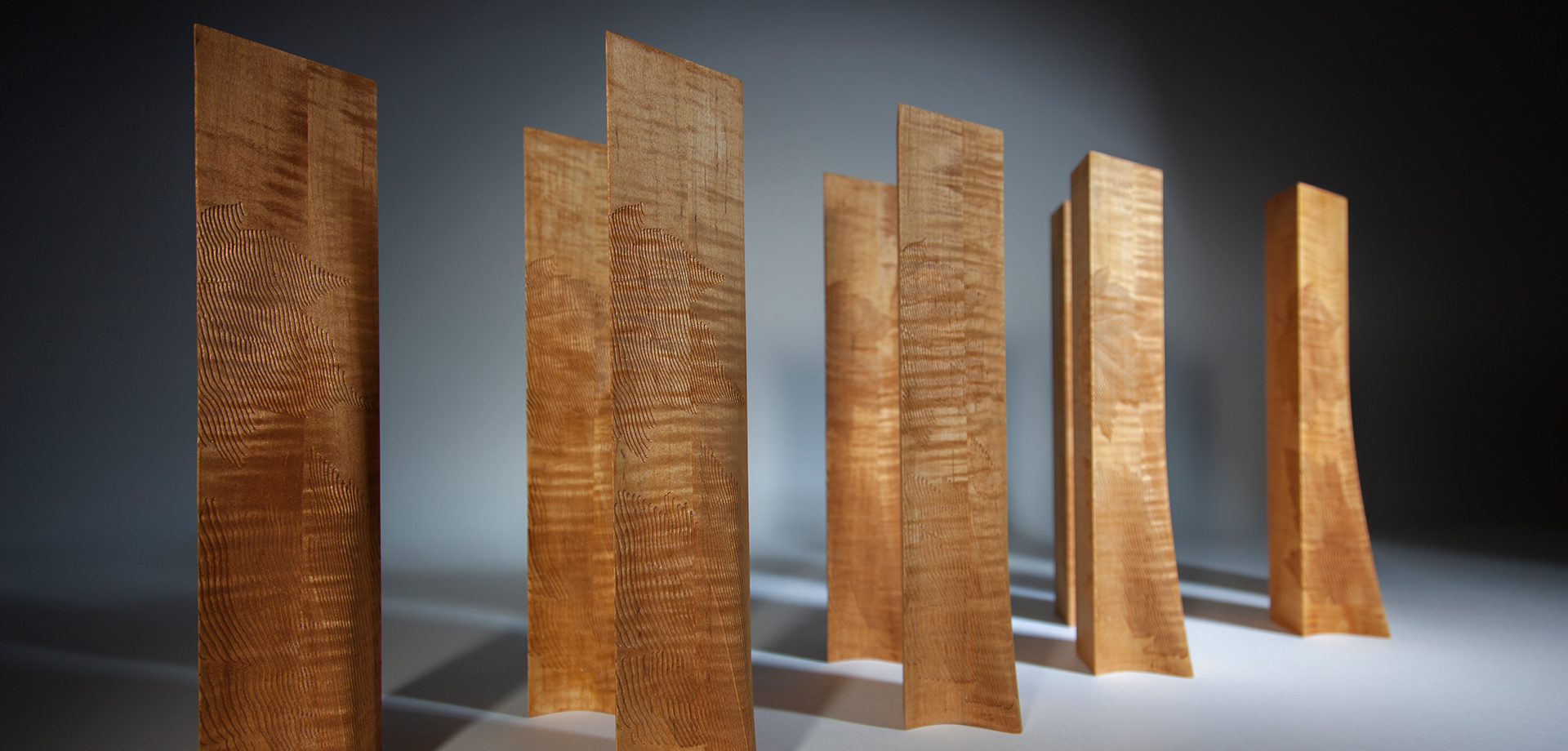
The final design was milled from curly maple and stained in different shades of amber. The lightest gold tone was reserved for the best in innovation award.
Stylized maple leaves generated from machine toolpaths were wrapped around the model and projected onto the surface of the award. These toolpaths were cut using a V-groove bit to complement the unique grain of the maple and the curves of the surface.
Finally, the nameplates were printed on polished copper plates using a substrate printer. The finish over the lettering is a thin layer of epoxy resin given a light texture to accentuate the reflective qualities of the finished copper next to the distinctive wood grain.
Congratulations to all the winner of the 2019 CanBIM Innovation Spotlight Awards!