
Does anyone really need another blog?
I was going to begin this inaugural post with something original like “Does anyone really need another blog?” Unfortunately, a few hundred people beat me to the punch. But, here it is anyway – the Carleton Immersive Media Studio (CIMS) blog. So why are we giving you a new blog that you don’t need? Because too much is never enough and because CIMS is currently involved in a host of new research initiatives — the results of which do not always fit into traditional modes of academic dissemination.
When I became the director of CIMS over ten years ago (2007), I focused our research on heritage recording and building information modelling (BIM). We were widely criticized. We were told — by prominent voices in the heritage community — that BIM was intended for new construction and could never represent the unique and subtle qualities that characterize buildings constructed with traditional methods and materials. I think we have proven them wrong.

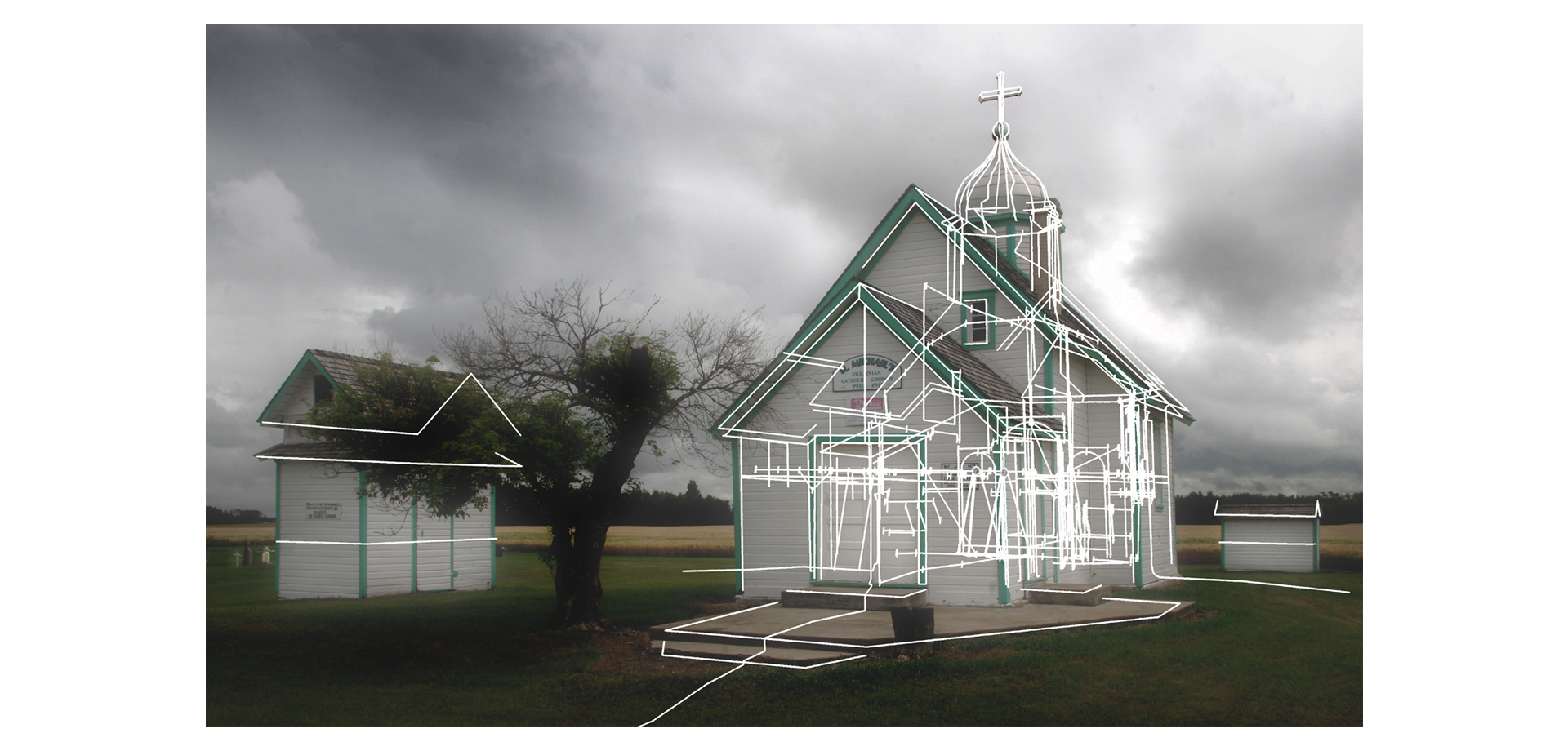
Our first projects were modest — a collection of abandoned or soon to be abandoned churches and a synagogue in Saskatchewan. These formed the foundation for an ongoing project that offers a database of materials and methods of construction for architectural heritage. That caught the attention of Autodesk Research and in 2009 we worked with them to develop a BIM of their Toronto headquarters in the historic King Street East district. In the years that followed — building on this early engagement with BIM — we were fortunate to be involved in recording and modelling some of Canada’s most significant architectural heritage.
In 2010, we expanded our repertoire to include digitally assisted storytelling. This involved a partnership with the MacOdrum Library at Carleton University, the Bytown Museum, and the Canadian Heritage Information Network. “Heritage Passages” addresses the relationship between the building of the Rideau Canal and the transformation of Ottawa from a lumber town to a city. This field of research has grown significantly at CIMS in the past few years and we are now working on stories on mobile, web, and VR platforms.
CIMS was at the centre of another controversy that took root in 2013 when we proposed the use of 3D printing, computer numeric controlled (CNC) routing, and robotic milling for heritage conservation. We argued that our approach was novel and we coined the term “digitally assisted fabrication”. Our argument was that digital technologies should be examined as an augmentation of traditional craft — not a replacement. Not everyone felt comfortable with this argument. Following a panel discussion at the Association of Preservation Technology (APT) meeting in Québec City in 2014, a member of the audience stood up and shouted, “CIMS… take your robots and go home. We have been cutting stone for one thousand years and we don’t need you.” We took that man's advice and in 2016, acquired two robotic milling arms — one for wood and one for stone. We now have them at home at Carleton University.
<video src="//videos.contentful.com/ujrjk97g2nk9/YeL5KtC0g08kGa4gYOgEw/94e5b08e26ca6736ae4243e6e97fb941/IMG_5896.MOV" controls type="video/mov"> </video>We invite you to join us as we continue to travel the boundaries between digital technologies and architectural conservation and rehabilitation. We are hoping we can engage a wider audience with this blog —beyond the often narrow halls of academia and the profit-driven conservatism of the architecture, engineering and construction industry.
Over the coming days, weeks and months, we will share new ideas, projects, and protocols. We look forward to hearing from you — whether you are with us or against us.