

Urban Futures: Intra/Inter
Over the next couple of weeks, CIMS will be showcasing our research conducted throughout one of our newer projects - Urban Futures: inter/intra. This project brings together diverse researchers at Carleton University to collaborate with public, private, and not-for-profit partners on questions and challenges at the intersection of the social and operational dimensions of “smart city” technologies.
Urban Futures: intra/inter has an objective of initiating a multidisciplinary research cluster capable of generating diverse and compelling knowledge about the future of technologies of urbanism in Canada and abroad. To achieve this, we have hosted a series of intensive design charrettes where participants debate and develop ideas in reaction to themed ‘what if’ scenarios. Previous charrettes have explored transportation and economy, while the upcoming event will explore climate change. Stay tuned for more information regarding the individual design charrettes and multidisciplinary work conducted throughout the research project.
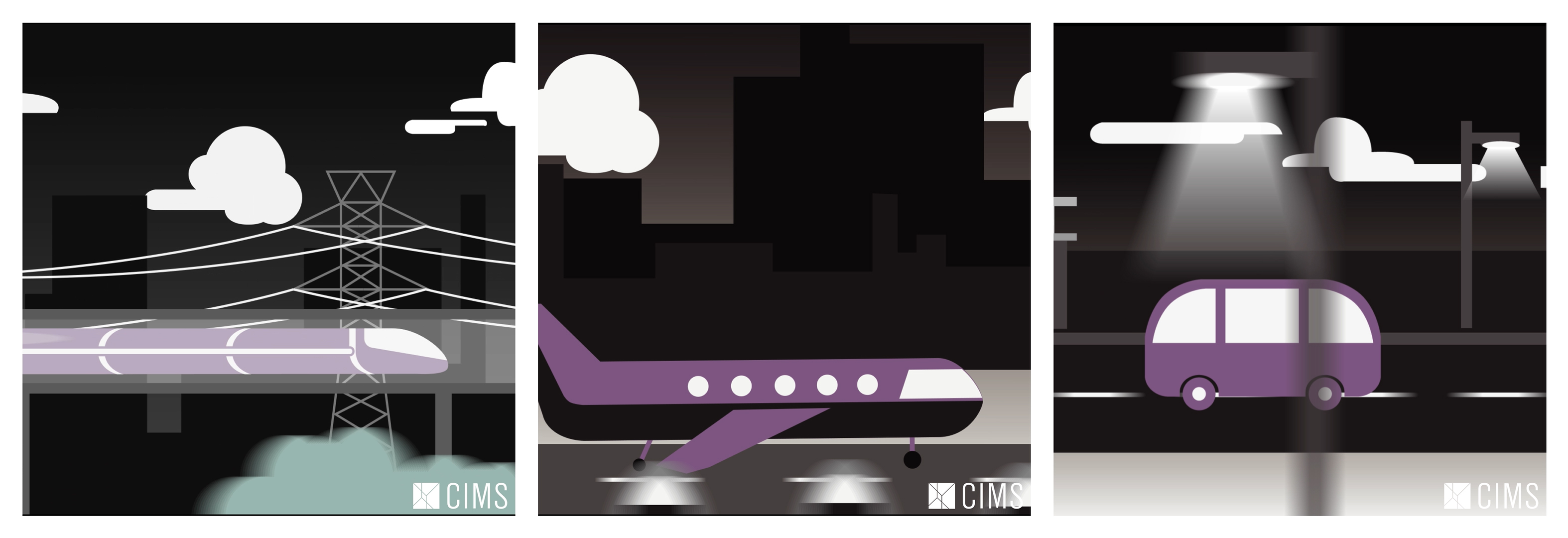
The first of three multidisciplinary charrettes for Urban Futures: intra/inter was focused on transportation within the Quebec-Windsor corridor. The goals of the charrette were to develop potential research questions for the group, as well as to investigate methods and best practices for working within multidisciplinary groups. The group was given a scenario about a traveler making their way through the corridor to their destination, using various modes of existing and proposed transit. These methods of transportation ranged from airplanes and trains, to autonomous vehicles, to a hyper loop through the corridor. The attendees were split into groups, and had three breakout sessions to discuss their thoughts on the proposed scenario. In the first session, groups were multidisciplinary, followed by a session grouping people from the same or similar disciplines, and a final session of multidisciplinary groups. For each session, the groups were instructed to look at the scenario on a municipal, corridor-wide, or global scale. This structure for the day was successful in creating in-depth discussions from many different viewpoints during each session, and together the group came up with many possible research questions surrounding the topic of future transportation in the Quebec-Windsor corridor.
The second of the three Urban Futures: intra/inter charrettes was looking at the topic of economy. Like the first charrette, the goals were to develop research questions, and explore methods of working in multidisciplinary groups. Instead of presenting a single scenario to the group, three topics under the umbrella of economy were chosen, giving the group a different scenario to examine for each breakout session. Each of these future scenarios had a positive and negative outcome, and the groups discussed why each scenario may or may not be realistic for the future of the Quebec-Windsor corridor. The first breakout session looked at the automotive industry in the corridor, and presented the scenario of an increase in recycling plants for automotive plastics, which are used in the manufacturing of electric vehicles, or a switch from vehicle manufacturing to battery manufacturing, causing a boom in lithium, cobalt, and graphite mining in Ontario and Quebec. The second session focused on construction and housing, presenting the scenario of reducing homelessness through universal basic income and more funding for low income housing, versus surges in housing prices causing tent communities to appear between the major cities in the corridor. The final breakout session presented the topic of the internet of things, where Canada either adopted e-currencies and 5G technology into everyday life, or fall behind, causing unregulated e-wallet technologies to hurt Canada’s banks and economy. For each breakout session, the groups were shuffled, but remained multidisciplinary. This method of presenting different future scenarios before every session helped to generate a wide variety of discussions, and with each session the group had more to consider in their responses.