
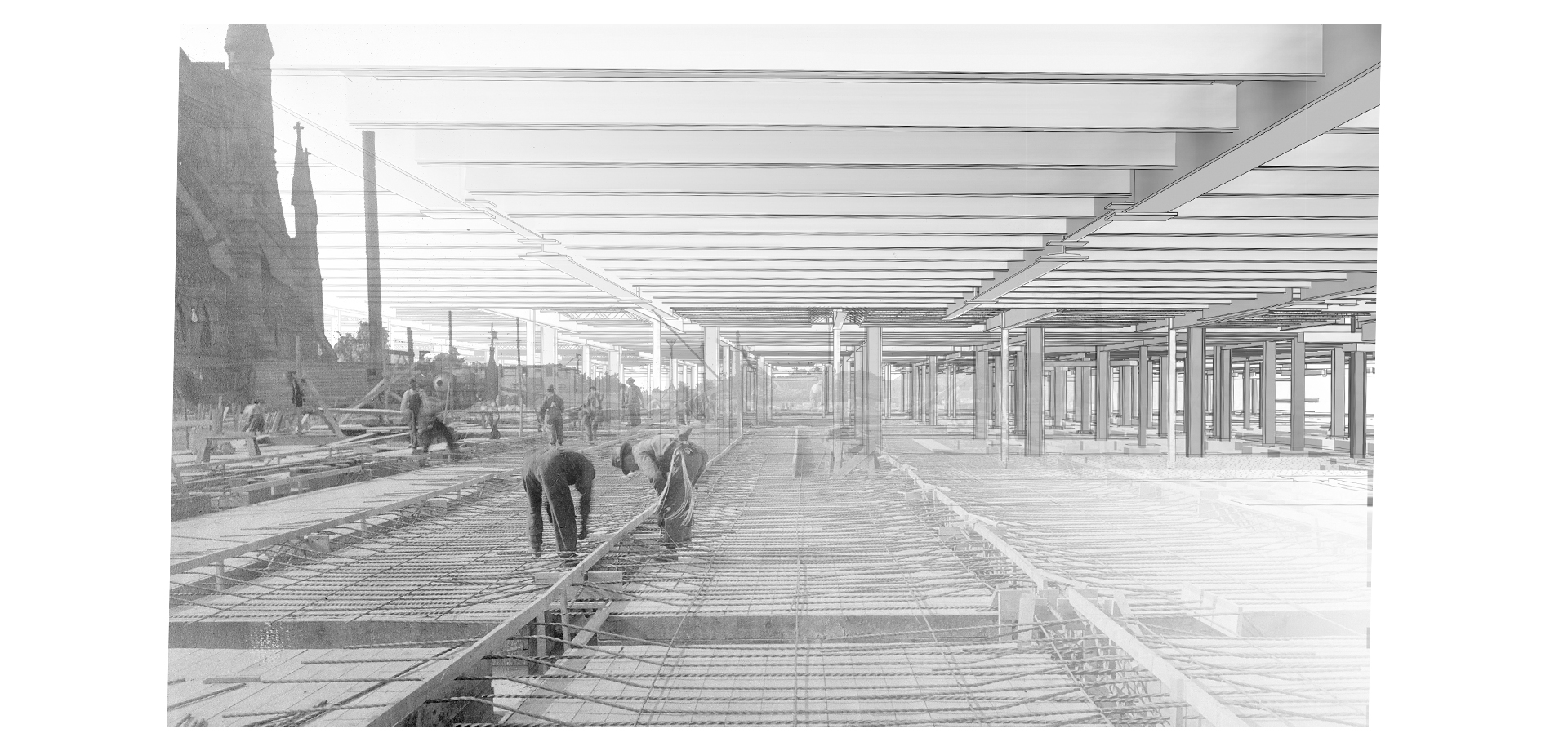
History: A Student's Perspective
When I joined CIMS in spring 2017 to complete the internship requirement of my MA in Public History, I was excited to break away from the standard historical field and work alongside a multidisciplinary team with a range of research interests. However, I was also plunged into a world of terms and techniques I had never encountered before, and a way of thinking about historical narrative that was new to me.

Public historians are often trained to consider history from a social perspective. We ask questions like: Whose voices are speaking through our work? What assumptions or biases are we carrying? How do we untangle the complexities in each historical moment? Until I began working at CIMS, these were questions I had mostly learned to apply to the history of people or communities. Now, my task was to apply these questions to architecture.
At first, it was difficult for me to think of buildings as having stories that didn’t involve people. But as time went on, I began to realize that everything has a historical consciousness. Each architectural choice has a reason behind it, and exploring these reasons can tell us something valuable about the past. To that end, CIMS provides the opportunity to workshop this past through a range of digital media such as web content, virtual tours, and virtual reality. Public history is by definition concerned with sharing information about the past, so using emerging technology is a way to reach those who might not otherwise pick up books about history or architecture. In this way, my work at CIMS links with my academic research, which focuses in part on how to draw more people into a deeper understanding of history.

Importantly, CIMS shows how historical learning can be integrated into our present-day lives. Far from being something that people must seek out separately from other activities, CIMS’s projects show that history can be part of experiences that include aesthetic, technological, and educational aspects. After a year as the history student on the team, I have come to realize that although buildings may not speak their stories as clearly as people do, they have no fewer to tell.