
Making Virtual Reality Portable
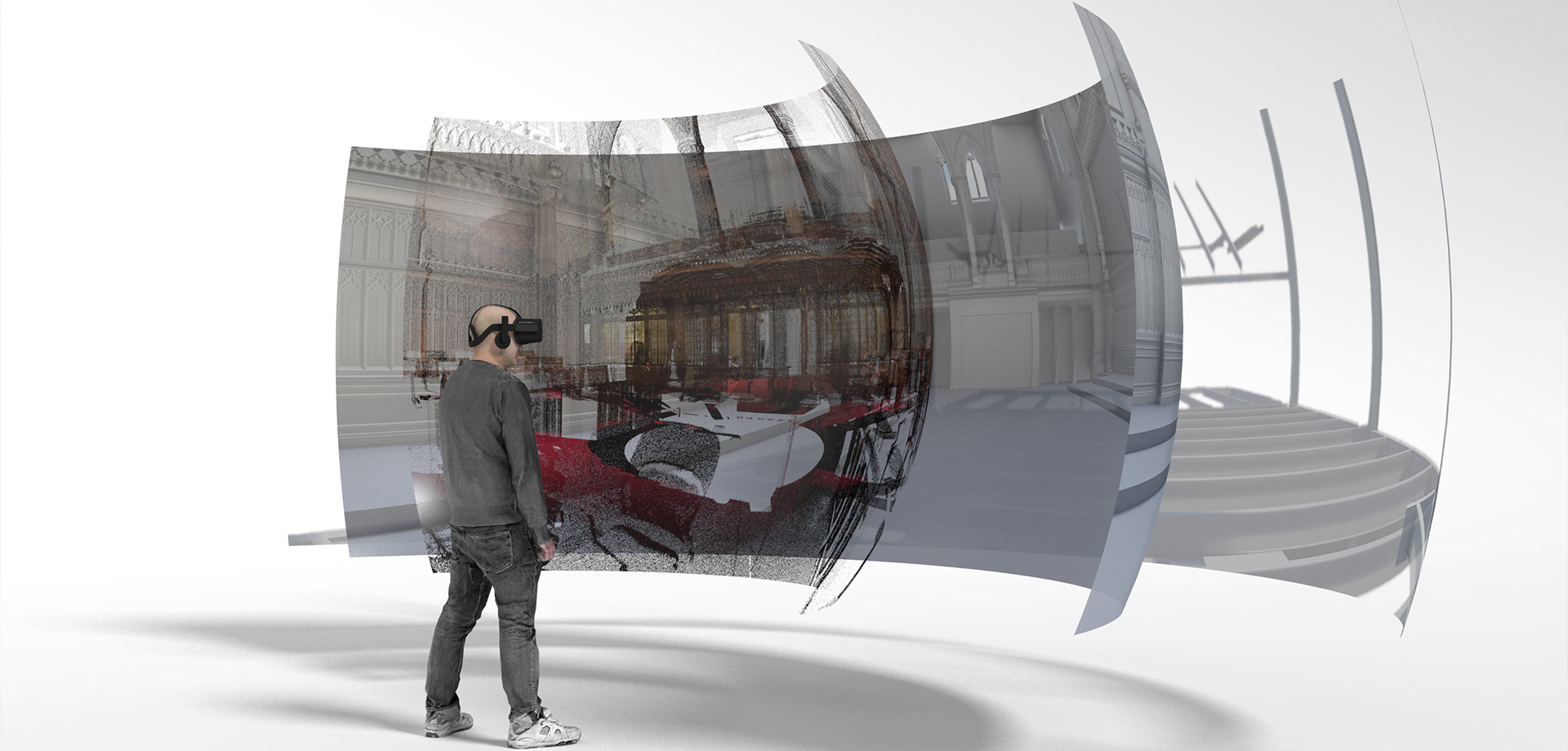
Last summer, in celebration of Canada’s Sesquicentennial, CIMS helped develop the VR Kiosk at the Capital Information Kiosk across from Parliament Hill. This walkup VR counter — a kind of VR bar —allowed visitors to experience aspects of the Parliament Buildings not available on the typical guided tour. The 360 experiences used existing CIMS assets to tell short passive stories focusing on the unseen spaces of the Parliament, the rehabilitation project, and the historical transformation of Parliament Hill. The experiences transported visitors into virtual reality representations of panoramic photographs, point cloud data, building information models (BIM), and historical photographs.
The kiosk was a huge success with a total of 31,499 viewings during its inaugural run from May 15 to September 4. Moving forward, the VR experiences will not have a permanent home and require a more portable solution. This provided CIMS with an opportunity to research new hardware and software solutions and to revamp the existing experiences.
The original VR kiosk used Oculus Rift headsets and Alienware desktop computers to run Steam’s Virtual Desktop to play the experiences. The choice of software was made to place the control of the experiences in the hands of the operator to make a more accessible and smooth experience. For the updated portable experiences, CIMS designed a custom application using Unity3D that uses the existing assets of the point cloud and BIM to create a user interface and menu environment. The participant places their head in the headset and are transported onto Parliament Hill, displayed in point clouds. In front of them is a scale model of the parliament buildings with markers identifying the different experiences available for viewing. The environment contains atmospheric content such as the sound of the carillon and the Canadian flags blowing in the wind. The new interface adds to the overall experience by immersing the user into a virtual world prior to entering the 360 experiences.

The interface and controls have been created for playing on the new Oculus Go headset – a stand-alone VR system that does not require a phone or computer to operate. A Playstation 4 controller is used to operate the experiences. The new set up has reduced the operation issues that occurred in the original configuration and creates a more portable solution. The large desktop computers were sufficient for the permanent location of the VR Kiosk on the plaza of the Capital Information Kiosk, however, when travelling to different events, a headset that requires no additional equipment is key.
The original experiences displayed were reduced to the two most popular – the Peace Tower Unveiled and From Yesterday to Today: Discover the Hill – which were updated to address user experience comments. The main alteration was to the audio by removing the background music and replacing it with environmental noises. In the Peace Tower Unveiled for example, sound effects such as the bells and the clock were added.
The VR Kiosk and the updated Portable Passive VR have provided a great method of introducing the public to aspects of the Parliament Buildings they are unware exist. When the headset is placed over their face they are transported in time to witness the construction, destruction, and reconstruction of the buildings on Parliament Hill as they learn about the history of the grounds. They are brought to the hidden spaces of the Peace Tower and able to stand within the bells or behind the clock faces. Virtual Reality has provided an opportunity to experience the Parliament Buildings in new ways – adding to the overall narrative of the buildings, their history, and their rehabilitation.