
Laurier House: Small Object Photogrammetry with Parks Canada
I had the pleasure of spending my New Paradigm New Tools (NPNT) internship with Marni Wilson, the head of the Imaging Lab – part of the Collections, Curatorial, and Conservation Branch (CCCB) – at Parks Canada. The CCCB is exploring different ways that they can digitally share parts of their large collection of artefacts with the public – an initiative that became even more important in light of COVID-19.
There are two ways in which you can perform small object photogrammetry when the goal is consistent, even lighting: the more complex way is to move around the object, moving the lights with you; and the simpler way is to rotate the object on the turntable, allowing you to keep the lighting and camera static. We have documented objects of all scales at CIMS over the years, but when it comes to small objects the process has always been manual and time intensive. The goal of my internship with Marni was to produce an easier and quicker workflow to document small objects using photogrammetry and an automated turntable. Speed was essential when you consider the size of the Parks Canada collection!
 Fig. 1 Parks Canada, FE.50.1.49 “Typical overlap for small object photogrammetry using a turntable setup”
Over the course of my internship, we completed a pilot project using several objects from the Laurier House collection that belonged to former Prime Minister William Lyon Mackenzie King.
We could have bought an off-the-shelf turntable, but I wanted something that was inexpensive, customizable, and I just like making things! I wanted to keep the design of the turntable simple, so that it could be easily replicated or repaired. I based my design on the ORION created by researchers at Fondazione Bruno Kessler (FBK) (you can find their paper here). I used the same physical design that they had implemented but simplified the electronics so that you only need one microcontroller (Arduino) to run everything. Using an Arduino also allowed me to simplify the codebase to a single script with some user input that is easy to run and modify. The last thing that I added to the design was a 3D printed box to protect the electronics over time.
 Fig. 2 “A diagram of the ORION turntable designed by researchers at FBK”
 Fig. 3 “A diagram of our turntable design”
It became apparent when documenting each artefact that small changes in typology, and materiality can require a completely different approach. This made it difficult to set one exact procedure to follow every time and means that it does need someone (somewhat) experienced in photogrammetry to operate it. However, the process is simple once you determine what the artefact needs. You set the parameters and the camera, Arduino, and turntable do all the work.
Much like the documentation, the processing for each artefact was also unique, however I was able to automate some of the tasks using Python scripting.
 Fig. 4 Parks Canada, FE.50.1.49 “The turntable in the Parks Canada Imaging Lab being used to document the inkwell from the Laurier House collection”
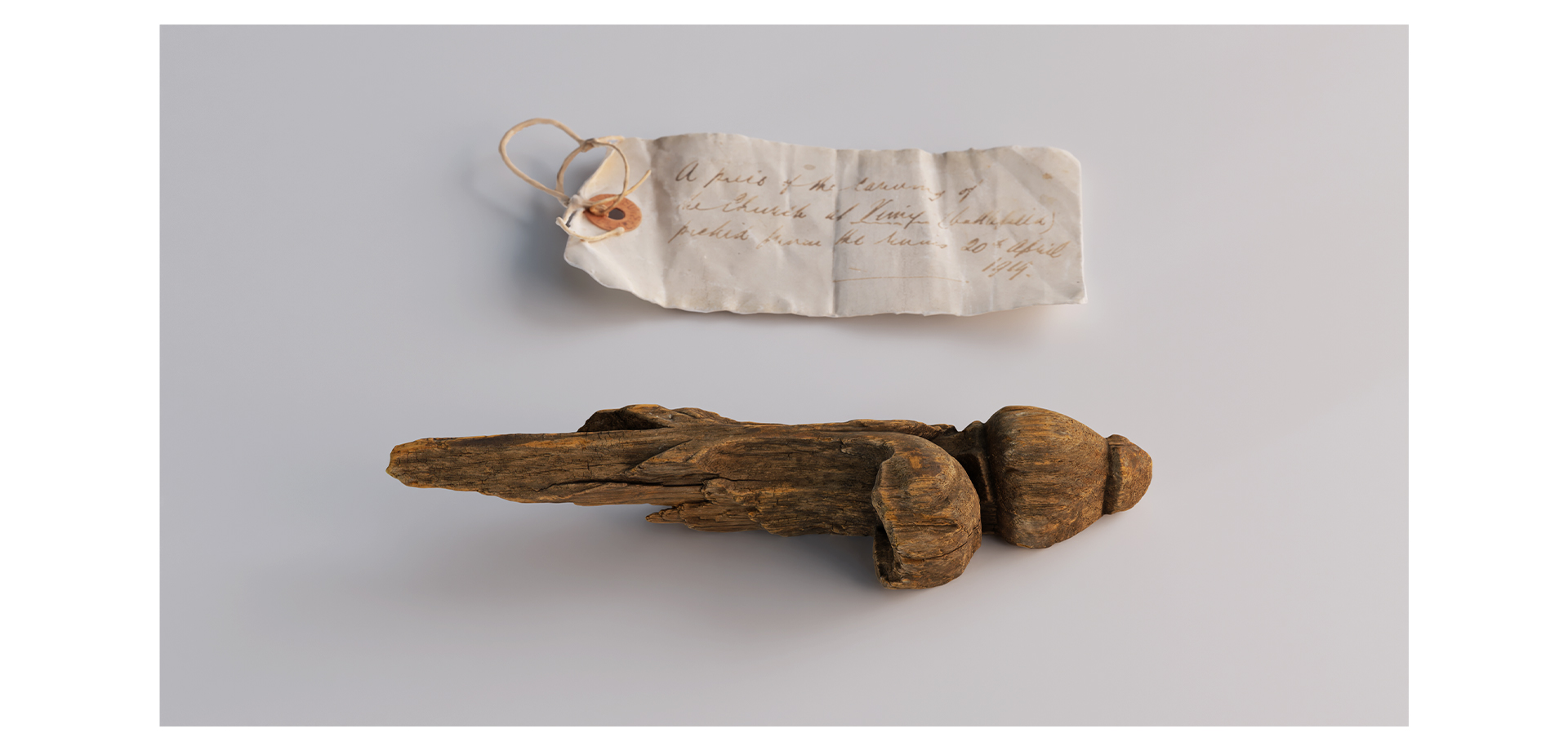
You can see the results of the documentation and processing of three of the artefacts – a relic from the church at Vimy Ridge, an inkwell, and a skate – in the following figures. I was quite happy with the results, as was Marni and the Parks Canada team. I had an amazing time working with my colleagues at Parks Canada and hope to see more 3D models of Parks Canada heritage in the future!
 Fig. 5 Parks Canada, FE.50.2.269.1AB “The results of the photogrammetry of the skate from the Laurier House collection”
 Fig. 6 Parks Canada, FE.50.1.49 “The results of the photogrammetry of the inkwell from the Laurier House collection”
 Fig. 7 Parks Canada, FE.50.5.156.1 “The results of the photogrammetry of the relic from the church at Vimy Ridge from the Laurier House collection”