
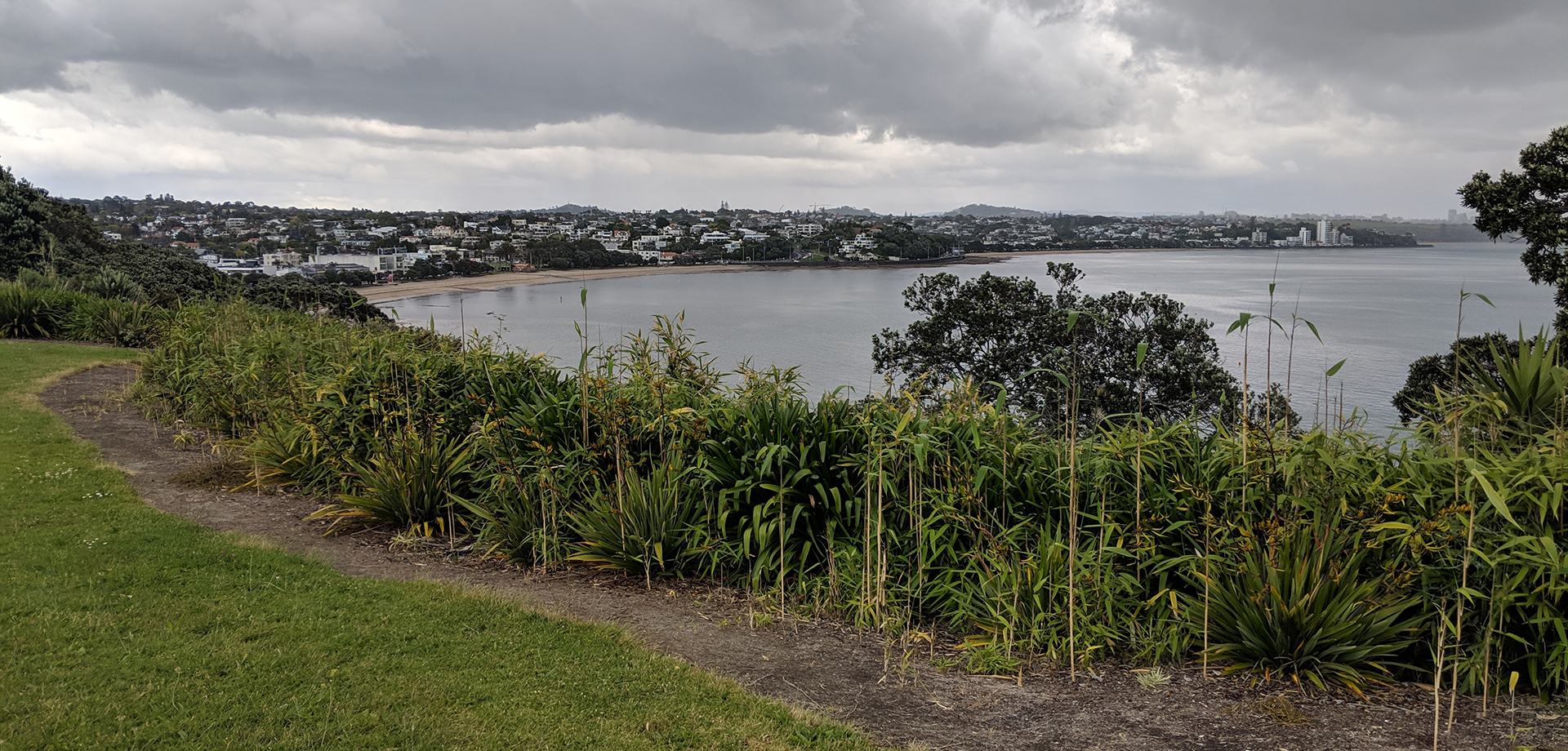
CIMS at ConVR2018, Auckland
As I sit in the Auckland International Airport ready to leave New Zealand and return to Ottawa, I reflect on the past six days and take a moment to appreciate how fortunate I am to have had this amazing opportunity. Auckland, located in the north island of New Zealand and containing the largest urban population in the country, was this year’s venue for ConVR2018 — the international conference for construction applications of Virtual Reality. With the theme of Evolving Construction: Towards a Technological Evolution, the 18th installment of the conference aims to bring researchers and practitioners in the architectural, engineering, and construction (AEC) industry together to discuss innovative research approaches to the combination of virtual reality, augmented reality, and building information modelling (BIM).
As team lead of the Digitally Assisted Storytelling projects and former lead of the Centre Block BIM, I have had unique insight into the relationship between BIM and virtual reality. In 2015, I began to develop a custom Level of Detail system called the CIMS LODIA that was more appropriate for the use in heritage BIM than existing systems that focused on the level of development of new construction projects. Unlike the existing systems, the CIMS LODIA broke down level of detail in the graphical representation (LOD), level of embedded information (LOI), and level of accuracy in recording of the deformation of building elements (LOA) as three separate categories that can vary in scale throughout the BIM. Another notable difference from other level of development systems is that the level of detail had a strong connection to the historical significance of the space being represented. Spaces with greater heritage and cultural importance, such as the Senate or House of Commons Chambers, were modelled at a high LOD level. The same principles can be applied to virtual reality to help create a narrative flow. Architectural elements of greater significance to the heritage representation and the narrative intention of the experience will be made focal points within the virtual environments by ensuring they are of a higher level of detail within the space. The paper I* presented at ConVR2018, From BIM To VR: Defining a Level of Detail to Guide Virtual Reality Narratives*, discusses how the CIMS LODIA helps define the guiding principles of a new level of detail system developed for virtual reality narratives.
ConVR2018 consisted of two full days of presentations by innovative researchers from around the world at the Auckland University’s Science Centre. Built in 2016 by the architectural firm Architectus, the Science Centre provided an excellent venue due to its design strategy that encouraged social interaction and collaboration between the disciplines. Presentations discussing how technology can aid in the design, construction, education, preservation, and safety of the AEC industry illustrated how innovative research is being conducted on a global level. All paper proceedings can be found at http://www.convr2018.com/.
I am greatly appreciative to be able to present my work as a PhD student and CIMS researcher alongside so many other exceptional researchers. Thank you to Carleton University and the Azrieli School of Architecture and Urbanism for the funding assistance for the conference travels. I am humbled to be able to represent the school on this global level with their support.