
CIMS on CBC
Most of CIMS’ current projects use computer-based tools to study, document, and explore heritage buildings. These projects require a skillset which incorporates both a respect for the history and craftsmanship of built heritage, as well as an appreciation for the possibilities that new technologies bring to the preservation of these structures.
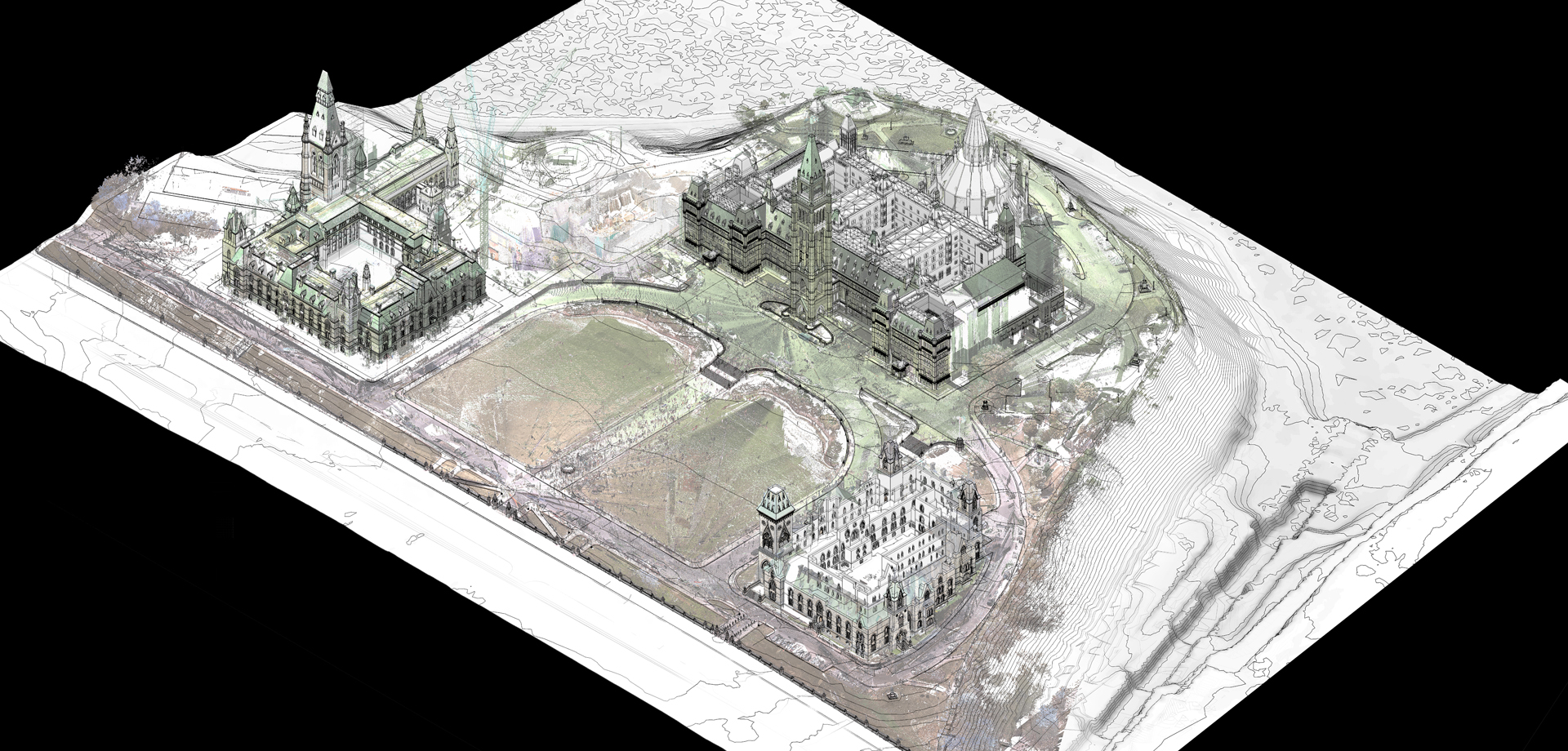
For some, it may be difficult to reconcile the use of computerized technologies with historic buildings—but at CIMS, it is key to our approach. As described by Stephen Fai in this recent interview with CBC (skip to 22:20 in the video), using Building Information Modelling to recreate an already existing building is a new and helpful way of preparing for the Centre Block’s upcoming closure. In the Centre Block BIM, individual components of the building are modelled in 3D and connected to detailed information about them, allowing for the entire structure to be accurately described as it exists before rehabilitation.
Digitally assisted fabrication—using digital technologies to supplement the work of a traditional craftsperson—is also a way of bridging the gap between the past and the present. Instruments such as Carleton University’s Kuka robots are not intended to replace the work of professional stone carvers, but rather create opportunities for a more productive work environment by allowing the carver to spend more time on close details and finishes.
Meanwhile, new technologies can be used on heritage buildings in more direct ways. For example, instead of using traditional abrasive methods to clean masonry, stonemasons on Parliament Hill employ laser cleaners. Faster and far more convenient than other methods, laser cleaning removes dirt instantly, does not require water, and does not carry the risk of damaging stone. Click here to see a demonstration.
A perspective on built heritage which does not treat it as sacrosanct and untouchable, but rather as part of a continuum of architecture that still reaches us today, is key to giving heritage new life in the present day. The needs of historical buildings are always evolving, and it is up to us to evolve with them.