
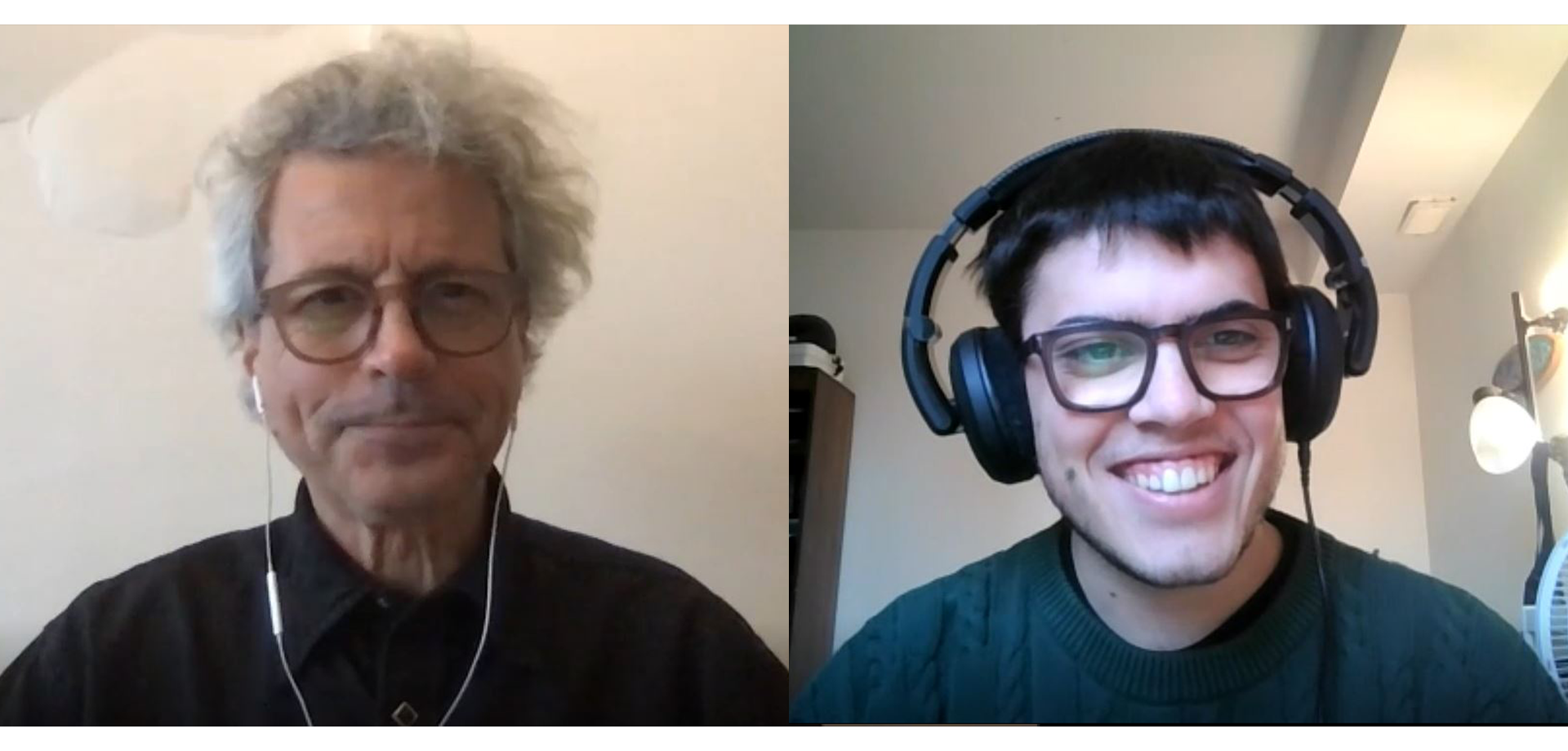
CIMS Interview Series: Dr. Stephen Fai
In the first installment of CIMS’ interview series, meet Dr. Stephen Fai, Director of CIMS. Dr. Fai has been working at Carleton University for nearly 25 years and at the helm of CIMS for nearly 15 years. The purpose of this interview, with it being a new year, was to learn about Dr. Fai’s past, present, and future with CIMS; and particularly to pick his brain on his experience with the seemingly endless yet lightning fast nightmare that was 2020. Seeing as I have never met Dr. Fai in person, it was also an opportunity for me to get to know him a bit better. So, if you’ve never gotten the chance to talk to Dr. Fai, this interview may serve to enlighten you like it did me! Ok, no more exposition. Without further ado, a conversation with Dr. Stephen Fai; Gentleman, Scholar, Director of CIMS.
Everett Rama: Hi Steve, what’s an average day at CIMS like for you, if there is an average day?
Stephen Fai: Yeah, every day is a little different, are we discussing this in the context of the pandemic? Or imagining that we’re back at…
Pandemic works, just an average day, let's say since I started at CIMS so since September (2020)
Okay, well, an average day at CIMS during the pandemic means sitting on calls, zoom or teams, for 6 or 8 hours a day… but that said, that’s not a bad thing. Because what that means is right now we have over 80 people working with us, full and part-time. (It means) that we have about 25 active projects, we’re working on a couple of major grants right now, one for NSERC Create and one for the New Frontiers and Research fund, and also some of that time on Zoom is speaking with some very intelligent people about some really amazing research ideas.
It sounds like your days are fulfilling still, which is good!
Absolutely, yeah, my days are great.
Knowing that you’re a musician and music lover, I know how hard this question can be to answer, especially if you like music just generally, so I’m not just going to ask you what your favourite song is, but what is a song that you can’t get enough of right now? Is there anything that you’re loving right now?
Steve pauses for 20 seconds to think about the question.
I mean, I try not to listen to things over and over, like even if I buy a new record or even a single, I listen to it once and hold back so I don’t get sick of it.
Yeah, ok, that is a very good strategy. What’s your most recent record buy then?
That would be Beyonce’s “Black is King”
Nice! I haven’t listened to that one yet…
It is awesome, and the accompanying video is just absolutely beautiful. The other really amazing thing about it is that it’s not just her, she introduces a lot of African artists which is great; so from that I actually went and purchased a bunch of their records as well.
Oh that’s amazing! So her intention, I imagine, worked perfectly in your case.
Yeah, exactly.
Well that’s great! Ok, moving on, what were you doing professionally before CIMS?
Well, I’m educated as an architect. I got a professional degree from Carleton (University), then I went and did a whole other series of degrees in religious studies, so I have an undergraduate, masters, and PHD in religious studies.
Nice! So as far as your academic background it sounds like you’ve done a lot of schooling!
Lots of school, and then I started teaching at Carleton actually full-time in 1997, I had a term appointment, and then in 1998 I got a full-time appointment, and then in 2002 I became the Acting Director of the school of architecture and I was the acting director for 2 years, then I was the director for a year.
Nice!
That was a terrible job actually so...
Steve laughs
Oh you didn’t like it? Not a fan of that one?
No, not a fan of that one… and then when another director came, which I actively recruited, who was Marco Frascari, who became a very good friend of mine, I (became) the Associate Director for graduate studies. I was doing that and in 2007 a colleague, Michael Jemtrud, who had started CIMS in 2003, had decided to move to McGill (University) and take a position there. So the director, Marco, asked me to step into CIMS. It was going to be temporary, and he said just get in there and try to keep things, you know, going, until we can find somebody, and I said my interests are not really in digital technologies, my interests are in churches, and my interests are in “what are we going to do with all these excess buildings now?”, (and) the history of churches, but what about the futures of these buildings? He said figure something out so I got some funding to do a project to document some churches. That was our first project.
That’s funny, my next question was how did you end up as director of CIMS and then what was your first CIMS project. I guess that was too predictable. That’s really neat though, was the project to go document churches like CIMS does? Like with scanning and…?
Yeah exactly, but we didn’t have a scanner back then so I “scanned” it with a tape measure. But yeah at that point we had a systems administrator, and then there was me, and we received some funding from Saskatchewan Heritage. That was my first grant, so I went out to Saskatchewan with a student and we visited, I think it was 12 churches. Actually it was 11 churches and a synagogue, and we wound up documenting 8 of those in detail and then modelling them, and then we received some more funding from the Social Sciences Humanities Research Council and built a small repository of our findings. The idea was to make that more accessible to the public so that they could learn about these churches and in particular how they were built and who built them.
So just to be able to show the public even if they weren’t there directly but also to teach them history and some background for the buildings?
Yeah, the project was called “Cultural Diversity and the Material Imagination in Saskatchewan’s Architecture” and the hypothesis was that when immigrant groups moved to Canada they would bring with them certain ideas of architecture and certain understandings of building, and that the expression of those cultural memories, those intangible cultural memories, would be most evident in religious buildings. That was the hypothesis.
Was that hypothesis found to be true?
It was. What I did find interesting that was kind of outside of my expectations was that a lot of the buildings were actually pre-fabricated; and this is in the late 19th century. I didn’t realize how widespread pre-fabrication was, even in the 19th century.
That’s interesting, so by pre-fabricated you mean they had the pieces (of the church) already and they basically had to just throw it up?
Yeah, exactly. So they would order (churches), initially from Toronto or Montreal, but then from Winnipeg (which) became a big hub for pre-fabrication. They actually had catalogues in the 19th century, like even in 1860 and 1870 you could order a whole building.
That’s crazy, yeah I wouldn’t have thought that either. That’s really cool, and did you learn that from that project?
Yeah, yeah exactly.
It seems that through a lot of CIMS projects, there’s one thing intended for it, and then there’s so much stuff learned through the process. Ok, that’s great that’s a thorough look into your first CIMS project, as for right now are there any CIMS projects that are particularly exciting to you?
Well, I guess I always kind of see it as a sort of totality, probably no one else does but… well, I take that back. I think I share this with some of my colleagues. I see the connections between all the projects but I think right now the kind of constellation that all of the projects make up is a national digital twin. So we received some funding in 2020, 2 years of funding, to develop a project called “Imagining Canada’s Digital Twin”, and that project really just is… Exactly that, like what could, or should, a national twin be for Canada. There are other countries like the UK that (are) looking at this initiative, and Australia. The UK is the furthest along, but even they are- it’s really in its infancy, and of course there are vast differences between the UK and Canada.
Yeah, that project- it’s cool that what you’re doing right now is just even imagining it because it seems like such a daunting thing to make a digital twin of an entire country and just the lead up I can see being extremely difficult.
Yeah absolutely, but then you can see how, you know, all the other projects could possibly play into this. Like the “Ontario East” project, that’s an app based project so a mobile app based project where one can access a database, and geometry related to the agrifood industry in Eastern Ontario, and we’re also doing projects with game engines and very large worlds within a game engine. Again, the question is “Canada’s digital twin: is it app based technologically? Or is it game engine based? Or is it a combination of both”, which is probably the most interesting possibility.
__Yeah, (it seems) a lot of decisions have to be made and it’s good to know, honestly, that there’s a full project planned for planning- or even just coming up with ideas for Canada’s Digital Twin, which hopefully will be made one day. So, this year has caused drastic change in everyone’s workflow, I imagine anyway with most people what they were doing at work before the global pandemic and how (they) work now is quite different. I’m wondering how it has personally affected your workflow. __
Well, for everyone at CIMS, possibly with the exception of Lara (Associate Director) and Laurie (Research Operations); (we) three are probably the only ones who really had a drastic change. What was interesting about that is it allowed us to flip to remote mode within a week!
Yeah, I guess eh because there was infrastructure for most of the people at CIMS already and then you guys just sort of hopped into it.
Yeah exactly, the challenge just became “ok how do we get a link between someone’s home computer, and their computer, a secure link between their home computer and CIMS computers.”, so, honestly, the pandemic has allowed us to expand, it’s kind of perverse but it’s true. People can share machines. So someone might work on one machine in the morning, or even in the evening, it’s essentially like shift work.
Do you think when, assuming things do, open up again that you’ll stick with what (CIMS) is doing now and keep doing that, or do you think you’ll go back (to how it was before the pandemic)? I assume that there were some people working at the CIMS lab before. Like they would go in, work on computers there, and then leave kind of like a shift?
I think it’ll be a hybrid of sorts, I mean… some of it just comes down to how people like to work, and… yesterday we had a series of interviews with all of the team leads, and there are some people who are just very happy to be working at home and they’re incredibly productive; others are saying “I just can’t wait to get back to the lab” because they miss that social (aspect) in the office that it gives.
Where do you sit in that spectrum?
I look forward to going back.
You look forward to going back?
Yeah
At this point, I rambled about how cool the CIMS lab building seems based on my one encounter with it and how great the atmosphere seems, Steve politely listened to me ramble and then said…
It’s a great environment, it really is.
Yeah, that’s the impression that I got as well.
And I miss my books.
Your Books?
Steve nods. Laughing, I ask…
Do you have an office with the, not generic, but like the stereotypical giant bookshelf?
Umm, well you know the big table in the lab?...
Yes.
…with all the stuff piled on it, that’s essentially my desk.
Nice!
So all of those books behind there are all my books.
Well hopefully you’ll be able to get back to your books soon. Has the COVID-19 pandemic inspired new ideas or approaches to CIMS work in general? Do you think necessity has brought some creativity in how CIMS work is done?
Yeah, I mean again that this many people could be working remotely and actually be actively producing I think is quite remarkable. So in the past we’ve been a little nervous about if we had to expand what would we do? So I think now we know that we could manage it, but also it’s given some inspiration for some new projects (like) the virtual tour that we did of the (Carleton) campus for the first week of September, I mean that was just a project of opportunity…
Yeah, and then it won an award!
...yeah and it was almost a joke when Marco Ianni, from the lab, said, you know, “why don’t we make the campus a big game?”...
That’s awesome.
...and the idea just sort of spun out of that.
And to great success! Or at least that’s what CanBIM thinks. That’s great, that’s really neat. I was originally going to ask instead of that (question), “do you think the pandemic has highlighted the need for what CIMS does?”, but that’s sort of obviously (a) yes, (but) the CIMS projects seem to fit really well into what we’re going through now, so it's just great to know that new ideas have come of it. Actually, a good question I guess would be if you knew the pandemic was coming, do you think that would’ve changed the work that CIMS did? Like in the years leading up to it?
No…
You think it would’ve stayed basically the same?
Yeah, I think this (pandemic) has shown that there is an appetite for people to see things remotely. An appetite, and then on occasion a necessity, so I think the more vivid and visceral we can make those experiences, the better.
__That’s certainly a good goal, speaking of goals, this year, what are your hopes and goals for CIMS? __
Well, I hope everyone stays healthy, that really is the number one goal, and hope. Well, there are two projects, again, that we want to move forward in 2021, two major projects which I think are, again, projects that really do bring together everything that we’ve been building on. The first is to put together a team to actually build a national twin- to put together a national team to do that. In order to do that we’ll have to put together a funding application, as I said at least one to the New Frontiers and Research fund, but we’re looking at other funding sources as well, and the second is a new training initiative that we’re going to approach through the NSERC Create program. The idea behind that project is to train cohorts, multidisciplinary cohorts, of students; architects, engineers, interactive media designers, (and) computer scientists, who work as a team along with an industry partner to solve an architectural engineering owner-operator problem. So a partner will come to us and say “I have this new panel system, but I’m not quite sure how to fabricate it. Can you help me figure that out?” So that multidisciplinary cohort of students works with that industry partner and resolves that problem for them.
That’s really cool, yeah.
So it kind of touches more on the modelling and fabrication side.
I think that’s one of my favourite branches of CIMS, I’m amazed any time I see that stuff… the whole digital to physical thing I’ve always really been intrigued by.
Yeah, agreed.
So, I can kind of guess your answer for this one, but long-term with CIMS, what are your hopes and goals? Say like if you ever decided to leave, what do you hope CIMS achieves (afterward)?
Steve thinks long on this one.
I guess I don’t- I don’t see this as kind of an empire. So I guess I have no aspirations.
It’s more of like, you go more project to project with it?
Well, I guess what I mean by that is CIMS will survive if there are people who want it to survive, and that’s what I mean by I don’t see it as an empire, like I don’t feel that kind of, you know, I’ve created this and I want to see it live forever. I just don’t have those kinds of imperial ambitions...
Yeah, that’s probably good, that’s probably a good thing.
So, you know, if I move on- I keep telling them they’ll just have to carry me out but if I move on, then, again, if there’s someone who has the- kind of the imagination and the energy to come in- or maybe it’ll be a group of people. I mean in many ways it already is a group of people. I mean there’s professor Santana, he’s an active contributor to the lab, Liam O’Brien, Gabriel Wainer; these are all people that we collaborate with so it’s all dependent.
So it’s like you hope there’s people to fill CIMS I guess, because it’s all about the team.
Absolutely, it’s totally about the team.
Cool. Have you always felt that way or early on with CIMS did you have different ideas about what was possible with it, what your hopes were for it...?
That’s a good question, I suppose when I first became the director I kind of saw it as a thing, that needed that kind of- a kind of vision, and a kind of structure that would see it perpetuate in and of itself; but what I’ve come to realize over the years is that it’s just about people. If you have the right people, things will be great, and we have the absolutely most amazing group of people. It’s phenomenal actually.