
CIMS Interview Series: Laurie Smith
Laurie Smith is the Manager of Research Operations at CIMS. Prior to this interview, I unfortunately never really got the chance to talk to her, but these interviews provide a nice excuse for me to get to know my co-workers. On top of being the Manager of Research Operations at CIMS, Laurie is also an integral part of the NSERC CREATE Heritage Engineering program. Basically, she keeps two ships afloat at the same time all while being tremendously well-regarded and respected by her peers. CIMS is lucky to have her, I’m lucky I got to interview her, and guess what? You’re lucky to be reading what she had to say! Here it is, an interview with CIMS Manager of Research Operations, Laurie Smith.
Everett Rama: Hi Laurie tell me a bit about yourself, what are your academic and professional backgrounds?
Laurie Smith: Hi Everett! I have a bit of a mixed bag of (a) background. I started out many, many, long years ago as an English major. Then I got a law degree and I practiced as a copyright and trademark lawyer in the 1980’s and 1990’s. I started studying history in the late 90s and got my MA in history in 2002. Before I joined CIMS I worked as a heritage consultant for about 15 years.
Wow, yeah you (have) quite the record.
I’ve got lots of years to fill in.
Did you jump around schools? Or was it all at the same place?
Oh I definitely jumped around schools because it happened at different points (in time). I started out in Hamilton at McMaster, getting the English degree, and then I did a law degree at Queen’s. Then I came to Ottawa to article with Gowling’s (Gowling WLG), I worked for the Federal Court as well for a while and then I went back to Gowling’s and did some copyright and trademark work for a number of years.
That’s so cool! That sounds like quite a fulfilling career thus far.
Yeah, lots of twists and turns.
Yeah, jeez, when away from work what do you enjoy to do recreationally?
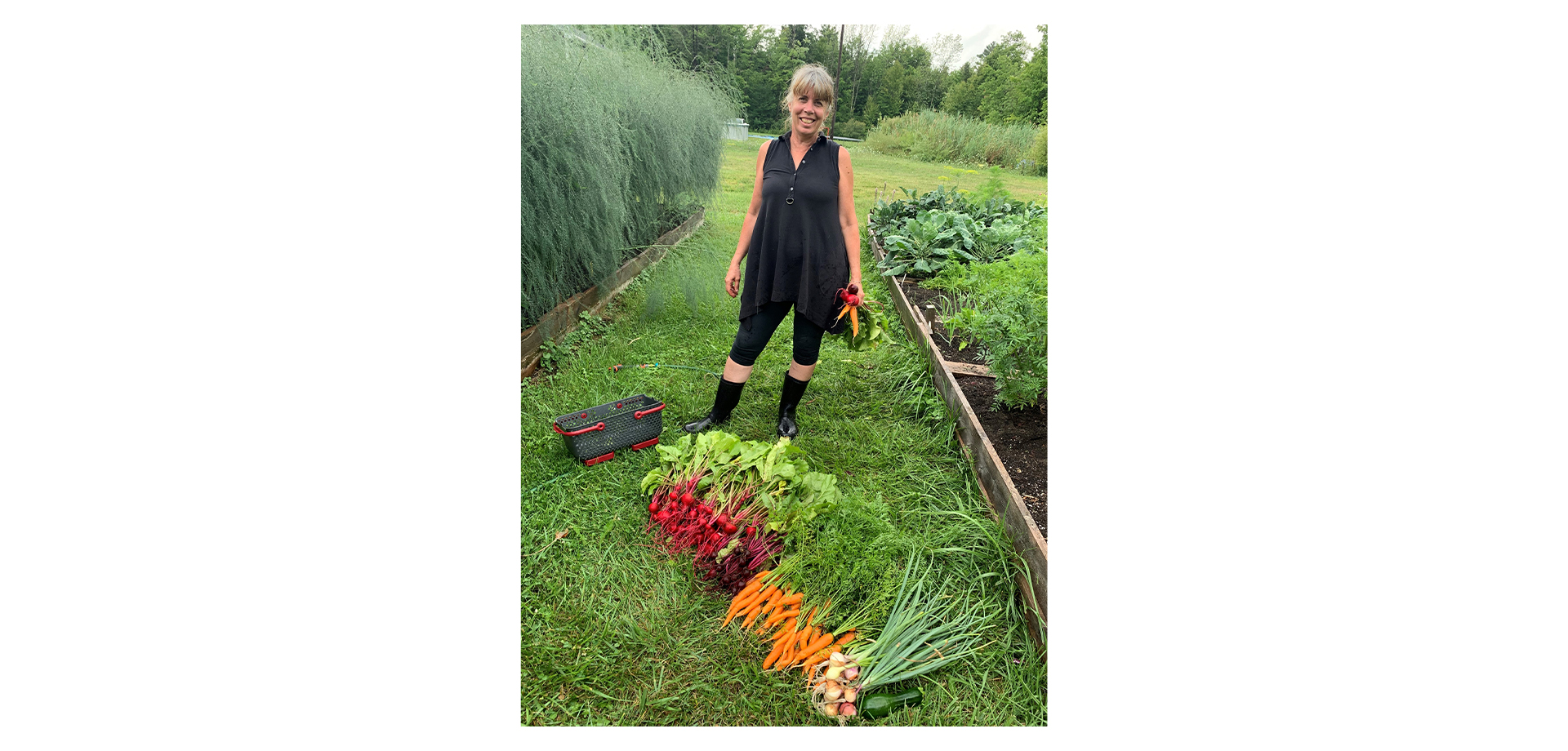
I guess now, at this point in my life, I spend a lot of time growing vegetables.
Sweet.
I have a place at Spencerville, about 50 minutes from Ottawa. It’s about 2 acres and my husband bought it because he wanted a place to work on his airplanes and cars and things so it’s a workshop but there’s enough land that I can put in a garden.
That’s awesome!
Some people at CIMS will be familiar with the produce I often (bring in). In past years I’ve brought in a lot of asparagus. We have a big asparagus patch.
So you’ve got a whole property, not for, like, hobbies, but for stuff that you guys enjoy to do?
Pretty much.
That’s amazing, that’s like the dream.
Pretty much, yeah. This summer’s dream is Michael wants to have chickens so he’s bought a chicken coop. He’s getting it ready, so with luck I’ll have some eggs coming in at the end of the summer.
I feel like you guys are gonna have a restaurant up there at some point.
Yeah! That’s a great idea! I’m not that much of a cook so if you want to come and do the cooking that would be good.
If you guys pay me a bit more, if it’s one of my CIMS roles, “Chef at Spencerville Farm” or whatever, I’m in.
Yeah, definitely.
Awesome, when and how did you start working at CIMS?
I’ve been working at CIMS since 2015, so I guess we’re coming up on 6 years. At that point I’d been working as a heritage consultant for, as I said, about 15 years and I was just looking for something a little bit different (to) change it up a bit. I worked on a contract basis so you can accept whatever contracts you want. At that point CIMS had just been awarded a couple of major grants. Steve (Steve Fai) had just gotten his “New Paradigms, New Tools” grant, and Mario (Mario Santana) his “Heritage Engineering” grant, and they needed some help. They didn’t really have anybody to fill in those roles. So a friend of mine at National Trust who I’ve known for years connected us and they offered me a contract and I started part-time. Then gradually over the years it took over. Now I don’t do any consulting, I used to work for a tribunal but I don’t do that anymore either, I just do CIMS.
Have you always had the same role at CIMS? Your title is slipping my mind.
Yes, I have a couple of titles. So since 2015 I’ve been working with Mario’s “NSERC CREATE Heritage Engineering” program. That takes up more than half of my time and that’s not as visible to the people at CIMS because it runs sort of outside of CIMS. It’s quite different work and a different group of people. A couple days a week I work on CIMS things. So my title is Manager of Research Operations, but what fits into that box has changed a lot over time, definitely.
That’s interesting, so your role has changed with the lab. Is it largely because the lab has gotten bigger that your role has changed?
Yeah, I think in part because it’s gotten bigger. I think when Lara (Lara Chow) came in and started her management role as Associate Director that really allowed us to shift a lot of things. With Lara there we’re able to take advantage of a lot of opportunities because she’s really doing the heavy lifting in terms of management and that really allows everything else to move forward. It’s definitely shifted since she’s taken over all of that. Y’know, with just simple things like payroll and contracts I laugh that Steve used to do it before I did and it was just a small job. Now it’s a lot bigger. We (also) spend a good chunk of time making sure that we have consistent funding for the projects. Some comes in with research contracts and some is just general funding that’s coming in and you have to apply for those sort of things.
The lab needs fuel!
Yeah!
Did your work as… I’m trying to think because you’ve done so many things… I’ll just say has your past work as a lawyer prepared you for your work at CIMS in ways that you weren’t expecting?
That’s something that has always come in handy. I wouldn’t say I’m surprised because it always shows up. I guess I’m always surprised that it’s showing up again. Basically, you go to law school and you learn about evidence and arguments, and being clear, precise, and convincing. Those are things that can stand you in good stead anywhere. So, y’know, when you’re putting in a funding application you need to make sure you have the evidence to support it and you need to make a convincing argument. It’s the same if you were putting together a research paper or a protocol. I’m thinking of all the work I do at Carleton (University), navigating the Carleton systems, a lot of that too. It’s just sort of general skills but they were really helpful in my career as a historian and a heritage consultant as well.
So the communication parts of your law degree have helped basically everywhere.
Yeah, I mean I think the other thing is having practiced as a heritage consultant my network and connections within the local heritage community run pretty deep (and) that’s always popping up in unexpected ways.
That’s really cool. Before I came to CIMS, I sort of knew heritage conservation existed, but it’s neat how deep the community runs, especially with how important that issue is becoming now.
Yeah people’s awareness of it, certainly with the projects we work on, (grows).
It’s very cool, so what makes up an average day for you at CIMS presently? I guess you said it’s only two days a week but I’m curious what you’re doing.
Yeah, I consider all of my work CIMS work because NSERC CREATE Heritage Engineering is one of the major CIMS grants.
Yeah, I guess it’s under the CIMS umbrella.
Yeah so all 5 days, and certainly it’s all mixed in together, working on all of that. In the average day, a lot of the time (I’m) just responding to emails. A lot of responsive work when there’s issues arising, I attend a few meetings and then I try to work on one of the bigger projects but I don’t always get to that, it depends on how many smaller issues there are. Sometimes (I’m doing) something to do with funding to support one of the projects, sometimes to do with the contracting or invoicing, y’know. All that sort of stuff. I was trying to think of something more interesting for you, (something) other than getting ready for a meeting, I think for some strange reason in the Fall I spent a lot of time on money. It was all about money.
Money, money, money?
Yeah! Trying to get money and spend money and account for money and set up budgets. Then the last month or so, and coming up, I’ve spent a lot more time on editing; writing and editing.
That’s quite the turnaround.
Yeah, money is something I’ve done since I’ve been at CIMS but it’s not really something that characterized my career. Writing and policy writing is really something that I’ve been doing my whole life. I’m back in my familiar zone right now.
Well that must be nice!
Yes!
Well that being your familiar zone, do you have a favourite facet of your work at CIMS?
Yeah, I would say anything that involves problem-solving is usually where I like to be and that can be all sorts of different things; the administrative work, the liaising with Carleton and also some of the work that I’m doing with World Heritage right now is really problem solving on a bigger scale. So that’s interesting, that’s the kind of work I’m drawn to, but my very favourite facet of work at CIMS is, I wanted to say (as well that) I have a lot of nostalgia for my office at CIMS and for the people who pass through the physical office every day. Y’know, the late afternoon chats, the ability to share things, even the ability to phone up other Carleton staff in other parts of the University and just talk about issues or ideas or whatever. Like all of us I’m having a lot of nostalgia for that.
Everyone I’ve talked to so far seems really drawn back to the lab and missing it so it must be a pretty special place.
Yeah, it is, and I appreciate the opportunity to do this. To spend a few minutes just chatting to somebody over Zoom, I’m at a different desk (than in my office) but I’ll just pretend you’re in the chair across from me.
Perfect, whatever works!
Yeah, the opportunity to connect is something that…
Is being sorely missed? Hopefully that’ll come back soon.
…We just have to work harder at it.
What are your hopes and goals this year, I guess, other than getting back to the lab?
That’s my main hope and goal… you know Everett, I didn’t really think about this question…
What’s the first that comes to your head that you hope to achieve this year, or maybe something that you’ve got your fingers crossed for coming up?
It will be nice if we can all get back to CIMS. This morning we met with Lara to talk about how we will manage things without her, so I guess that’s my hope and goal is to get through the year without Lara! She’s not going to be gone completely, but still, that’s gonna be a big challenge.
Lara, CIMS’ Associate Director, is leaving for maternity leave this summer.
I’ve only been here since September and I can already see that that’s gonna be a looming thing until she’s gone. I’m sure it’ll be figured out, but she’s also my direct boss…
I’m trying to remember who got assigned to you, I’m not sure now, it’s all good, it will happen. I think that’s what’s important. CIMS has always floated to the top. We’ve always evolved and different people come and go and we all feel that we’re indispensable but there’s some spirit beyond us I guess that’s keeping us all going because, y’know, things will shift and we’ll sort it all out. Like you arriving has been a godsend, it’s fantastic, you’re a dream! We were struggling with the role that you now fulfill.
You’re too kind. Brb, heart melted
I think that’s the important thing; CIMS’ openness to new ideas and Steve’s approach that we always say yes. While that might sound a little extravagant, I think that openness to letting talented people take on really interesting positions of responsibility is really what keeps CIMS going, and that’s probably what I’m looking forward to, what comes next? Who comes through the door? Who steps up to the next role? One of my programs, the NSERC CREATE (program) will end in 1 year’s time. Over the next year I’ll be wrapping up a lot of things, and then, y’know, what happens next? Will something else arrive? What will happen next for me? That’s another big question.
Restaurant in Spencerville!
With my new chef, Everett!
Yes!!! Yeah, I think if you have the right people, always saying yes is a good strategy. When this pandemic passes, what is the first thing you’re going to do?
There’s gonna be a lot of hugs going around. A lot of hugs! I think it’ll be interesting what comes next, but whoever is nearby will get a hug.