
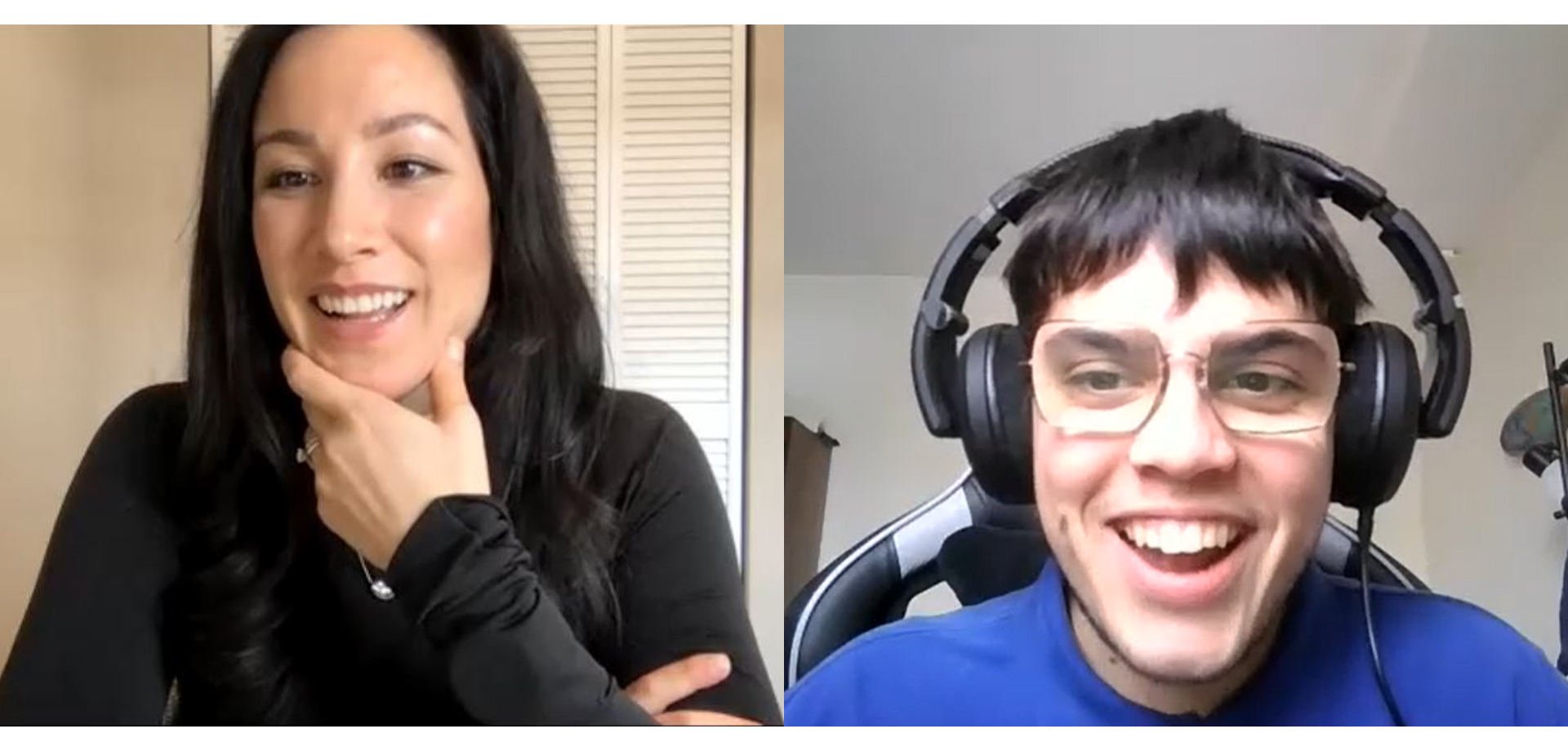
CIMS Interview Series: Lara Chow
In this interview, the second in the CIMS Interview Series, meet Lara Chow, CIMS’ Associate Director! Lara is a boss. She's a boss in both the 2009-chic colloquial way, and the literal way. She keeps CIMS on track and in tip-top shape no matter what befalls us, or her. She didn’t earn the “boss” title solely through her professional life though. Outside of CIMS Lara has achieved things that will leave you awestruck, so go ahead, be struck with awe. Learn all about Lara in this, the second interview of the CIMS Interview Series with Associate Director of CIMS, Lara Chow!
Everett Rama: Hi Lara!
Lara Chow: Hi Everett!
What’s an average day at CIMS like for you these days, so pandemic CIMS day?
Pandemic-wise? There’s not really an average day. There was never really an average day before the pandemic but that’s something that I really enjoy about working at CIMS. So for instance within the past, I’d say, term, some days I’m writing a research grant or a project proposal, or I’m modelling the historic structure in a heritage building, or I’m trying to learn code to optimize an excel spreadsheet, and then in between all that there’s basically a ton of Zoom calls and Slack messages for project and lab management. So yeah, it’s pretty different day-to-day.
Ok, well yeah that’s cool, (but) before we delve too far into you and CIMS, what is something you’ve achieved outside of CIMS that you are proud of?
Definitely the Iron Man where I qualified for the world championship in Hawaii.
Oh man!
I came out of the water in twelfth place and ended up crashing my bike really badly within like the first kilometer of the bike ride. But for me quitting a race just really isn’t an option so I just pushed through the pain and ended up coming first in my age group and qualifying for Kona! Then the next day I had x-rays and it turned out that I had fractured my elbow.
Oh my god! Well, you defined iron man! What’s your best event in that? Are you best at swimming, biking, or running?
Um, no swimming I’m a rock. That’s why I’m always coming out of the water pretty far back, but definitely good on the bike and steady on the run and that’s kind of what…
That’s what matters?
Exactly.
Jeez that’s rad. I had no idea. Ok, well now some lame stuff what are your academic and disciplinary backgrounds?
Joke Alert! Academic and disciplinary backgrounds are mega cool.
Oh it’s not lame.
It’s not lame.
I did a year of history and theory of architecture and then applied to the Bachelor of Architecture program. I was actually part of the first group that did the conservation and sustainability major in the undergraduate degree. That was a really great program. I learned a lot from it and a lot of what I learned still applies to what we’re doing at CIMS today.
Sweet!
Then I did my masters and I started my PHD but then I realized it wasn’t for me and I just decided that, y’know, I really enjoyed my work at CIMS. So I left the PHD program and started working here full-time.
Nice! When was that? Straight out of school?
Yeah, I never took a break in between any of that. Some days I regret that I didn’t take a break because sometimes I think it’s good to step back and critically think about what you’re doing, but I just pushed forward.
Are you from Ottawa? Or did you come to Carleton (University) from far away and just got stuck here?
Born and raised.
Niiice!! How long has it been that you’ve been with CIMS?
So I started in 2015 and the way that I actually ended up working here is interesting. I was TA-ing for Mario Santana’s historic site recording class, and I had come in to drop off a piece of equipment. I was having this conversation with Mario telling him the firm that I was working with was downsizing and they had to let me go. Steve (Fai) happened to be in the room and Mario turns to Steve and says, “Steve! Why don’t you hire Lara?”, and basically the rest is history so I do owe a lot to Mario for putting Steve on the spot like that.
That’s awesome. So you started (as a) researcher and climbed the ladder I imagine?
Yeah, I mean I came into CIMS, I hate to admit this, but I didn’t really know a whole lot about point cloud (and) I didn’t really know a whole lot about actually modelling HBIM (Heritage building information modelling/model) but that’s one of the amazing things about CIMS, we never judge an applicant on if they’re an expert, but their potential. My first project was starting on the Centre Block HBIM and I was modelling all the historic structural steel. After a few months of doing that I would, y’know, close my eyes and see (steel) beams and I eventually started dreaming about them. There’s over 12,600 individual steel pieces inside that model it’s pretty amazing.
Jeez, I imagine, I didn’t realize CIMS has been doing the Centre Block project for so long. Was it going on before you even got to CIMS? Before 2015?
2015 was the first year that we did the Centre Block project. Katie Graham was my team lead and then she went on leave at the end of that summer and I took over as the team lead for (the) Centre Block HBIM project.
And it’s still going isn’t it?
Yeah! We’re still very involved in the Rehabilitation Project. We handed the model over to the rehabilitation team and then they brought us back on to complete the model and we’re also working on some other exciting research projects with CENTRUS.
Sweet, CIMS gets work! That project’s probably going to go on forever that building seems like it would have…
Yeah, there’s a lot to do.
…a lot of stuff to do. (So) how long have you been Associate Director?
I became Associate Director about two and a half years ago.
That was it? They just said, like, “Hey d’you wanna be Associate Director?” and you said, “Yes please!”?
Actually, when I realized that I really enjoyed working at CIMS and that the PHD just wasn’t for me I had a conversation with Steve and we sat down and we talked about what that transition would look like for me working at CIMS full-time. Then from there there’s been some major growing pains from a lab of 15 people (growing) to a lab of 90 people. I guess I just- hmm, how do I put this… there needed to be a little bit more organization and management, and I kind of fit into that role, and that’s how I became Associate Director.
So you were born of a need, which is great!
Yes! Yeah, I guess you could say that.
That’s actually a good segue, how has CIMS changed since you started here?
I’d say drastically in every way!
Wow!
Yeah, I mean when I first started, we used to have our lab meetings around the conference table in Studio 2 and there was about twelve to fifteen of us. Now we fluctuate between 80 to 90 researchers, so that’s a big change. I’d say that the research has changed a lot too. Our projects are a lot more complex, and that requires the lab to be more diverse and multidisciplinary. Initially (we) were primarily architects, and then there was a couple more engineers. Now we have students with backgrounds in computer science, information technology, and even history! I mentioned there’s been quite a bit of growing pains from that transition of 15 people to 90 people. So running a research centre of 90 people requires a lot more communication, and a lot more organization.
Yeah, even just one Associate Director seems light for that many people.
But the interesting thing is that we’re all learning as we go and that’s one of my favourite things about the lab. There’s a lot of opportunity to learn and grow as young professionals. It’s really just been amazing to watch undergraduate first-year hires now become Team Leads and experts in their field. For instance, Hilary (Romaniuk). I was TA-ing her in first-year studio and then I asked her to join the CIMS team and now she’s leading our most complex and challenging HBIM projects at CIMS, so it’s pretty amazing to see that growth.
Yeah, seeing that growth must be really fun. It’s like you get to be a teacher without actually having to be a teacher. It’s nice, you get to just watch them, your “students” or whatever, just do it all on their own.
Yeah, and then after that once they kind of “graduate” out of CIMS they go off into the industry, or the profession. It feels so good seeing our “graduates” succeed and thrive.
Very cool. Just to go back real quick, the change from fifteen to ninety (CIMS team members), was that a gradual thing? Or was that like “we’re gonna hire way, way, more researchers this year because we’re gonna get giant.”?
It was a gradual phasing. I wouldn’t say it was a huge, fifteen to ninety overnight (sort of thing). After I started we were working on the Centre Block and then we’d get another contract and another contract and it kept adding (up). I think that’s a nice number (of researchers), around 90. We’re almost lucky that we’re not in the lab right now because that would be really tight in terms of space. That’s one of the benefits of working remotely, we’re able to bring on more researchers that way.
Yeah a bit more room to have those people, which is great. This year has caused drastic change in many people’s workflows, has it affected yours?
I wouldn’t say it’s drastically changed my workflow except for, obviously, I think this change has happened to everybody, basically all of my in-person communication is now done through Slack or Zoom. That’s definitely the one thing I miss the most about not being in the lab. You’ve never personally been in the lab yet because you were hired during this pandemic, but there were tons and tons of laughs from those informal conversations that we’d have every day and that’s something that you don’t really get as much of with people being stuck behind computers. So for your sake, and everyone else’s sake, that’s only met CIMS during the pandemic I hope that we can all be back in the lab soon, when it’s safe, of course.
If there’s people that leave (CIMS) before they get the chance to actually go in the lab, maybe you’ll have to have an alumni Christmas party or something where you just bring everyone in so they get to see it at least once.
I mean, our Christmas parties are pretty epic so that’d be great!
I’ve heard tales and I’d like to be part of one. What are your hopes and goals for this year?
There’s a couple big research grants that we’re putting together this year and Steve had mentioned the NSERC Create in his interview so I’m not gonna rehash the synopsis of the proposal, but I do think that will push the lab in a really exciting new direction so I’m very excited to work on that. Then personally for me, 2021 is gonna be a lot different. I’m leaving for maternity leave in June…
Yaaay!!! Congratulations Lara!!!!!!
…so my one goal is to make sure that (that) transition is as smooth and seamless as possible in terms of handing over tasks and projects.
I’ll start crossing my fingers for you now! I’m sure it will go just great but you never know.
Yeah, we’ll see, it’s gonna be a different and more challenging year that’s for sure.
Yeah, most of 2020 was the same thing, like we’ve all just been in this pandemic but hopefully 2021 will have a bit more structure because we’ve gotten used to it now. I’m glad that transition is happening this year in June and not last year in June let’s just say that.
Yeah, no, for sure.
“Yeah, no, for sure” is an extremely common and hilarious affirmation used by basically everyone I know in Canada. I wanted to point this out because I LOVE IT and also, if you’re not Canadian it may be super-duper confusing. Read on!
Do you anticipate 2021 to be more or less challenging than 2020?
(there are) two parts to how I would answer that. To actually answer your question, like we were just talking about, I think it’s going to be less challenging. I think a lot of us have settled into this new way of working, and although it’s not ideal I think we’re starting to see some of the benefits, like I mentioned, being able to bring on more researchers and have a bigger team. So it’ll definitely be interesting to see how things change beyond 2021. (Like) maybe a hybrid work scenario of working from home and working in the lab. The other thing I wanted to touch on is on the word challenging. At the lab we don’t really see challenges or something challenging as a bad thing right? Because a lot of the time our best research ideas come from those really challenging questions. So from that perspective, I hope that 2021 brings on all new kinds of challenges for CIMS.