
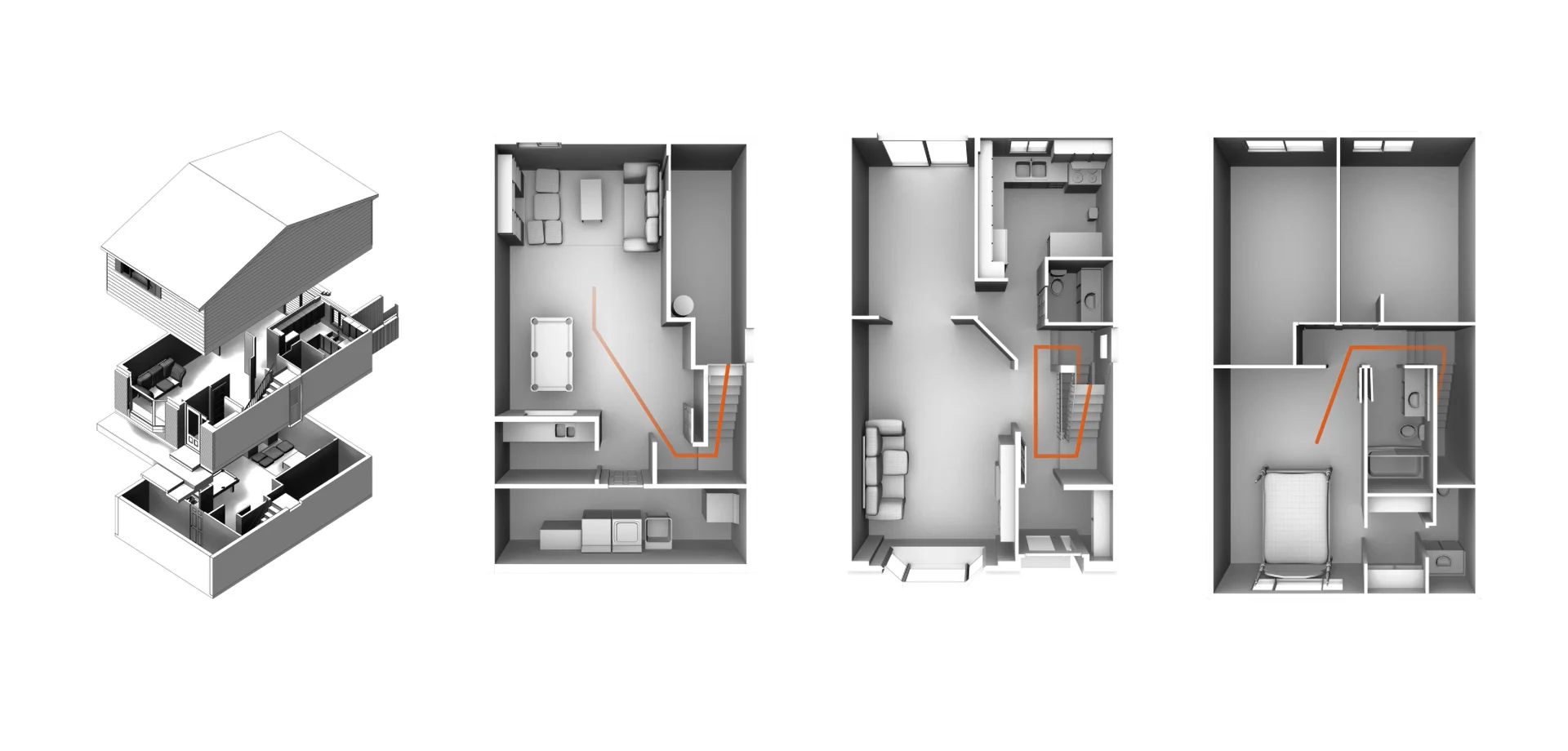
Crown Attorney Evidence Modelling #1
The portfolio of evidence modeling projects for the Crown Attorney aims to accurately represent photographic evidence in a demonstrative, digital but non-sensational format, in addition to presenting a clear explanation of the sequence of events of a crime. In all projects, CIMS was contracted because the photographic evidence taken either at the crime scene or postmortem were deemed by the Judge too gruesome to be used as evidence for public and juridical viewing during proceedings.
By non-sensation format we mean to say that the models produced are informed by photographic evidence only as an accurate reference, but that the information is visually transformed to omit the additional shock value and emotional responses they elicit. This aspect is important because it not only gives dignity to the victim but also reduces the risk of PTSD for the judge, jury, and other attendees. These projects allow digital tools to hold the narrative and ensure that the court can do its work in a more dignified manner.
The 2013 project provided a simple 2D injury mapping of the victim along with the physical path of the perpetrator presented in a 3D digital model of the crime scene. This case ultimately helped us bridge our previous work with the 3D digital representation of architecture in order to model the crime scene itself and reveal the possibility to use 3D representation as a means of storytelling for scenarios beyond the realm of architecture. Given that this was an early project in CIMS’ history, the modelling tools available for the task were much more limited. The model was produced with SketchUp and the 2D injuries were mapped with photoshop onto an anatomical representation and printed in a series of transparent layers with help from the coroner’s office to locate injuries in the postmortem report. Despite the 2D nature, the project provided the essential methodology that would be carried through our future projects in different ways.