
NAC@50+
In late March 2020, right on the brink of the COVID-19 pandemic outbreak, CIMS was awarded a two-year Social Sciences Research Council of Canada (SSRHC) Partnership Development Grant for their proposal NAC@50+ – Redefining a National Historic Site – a proposal that has evolved several times over the last 5+ years. Excited to finally bring this project to life, the lab began strategizing how it would be possible to document such a complex building in a time of remote work and social distancing. The goal of the NAC@50+ project is to redefine the meaning of a National Historic Site in the digital age of 2020. We’re showcasing this in a few different ways, including through the use of an immersive storytelling experience built with Unreal Engine.
When I was asked to lead this project, I didn’t hesitate to say yes. I began my work at CIMS in the Digitally Assisted Storytelling (DAS) stream helping to develop a website documenting the history of Parliament Hill in time for Centre Block’s 10-year rehabilitation. From there I worked on several VR and AR projects, including Parliament: The Virtual Experience. Leading NAC@50+ felt like a homecoming. What really made leading this DAS project different was the introduction of a remote workplace. I was so used to communicating with my colleagues within the studio, where we would usually hold brainstorming sessions at the start of a project to come up with ideas of how to tell an interesting narrative. The NAC@50+ team was comprised of new staff and researchers that I’ve worked with for years, so communication was imperative to the success of the project.
We started the summer term by searching through the Library and Archives Canada database for any material that had to do with the National Arts Centre. We took these entries and created several spreadsheets, tagging each item with information related to the history of the building. Additionally, we began to flesh out each of the three narratives identified in the grant proposal: Conception (pre-NAC), Embodiment (1969 to 1999) and Rejuvenation (2000 to present).
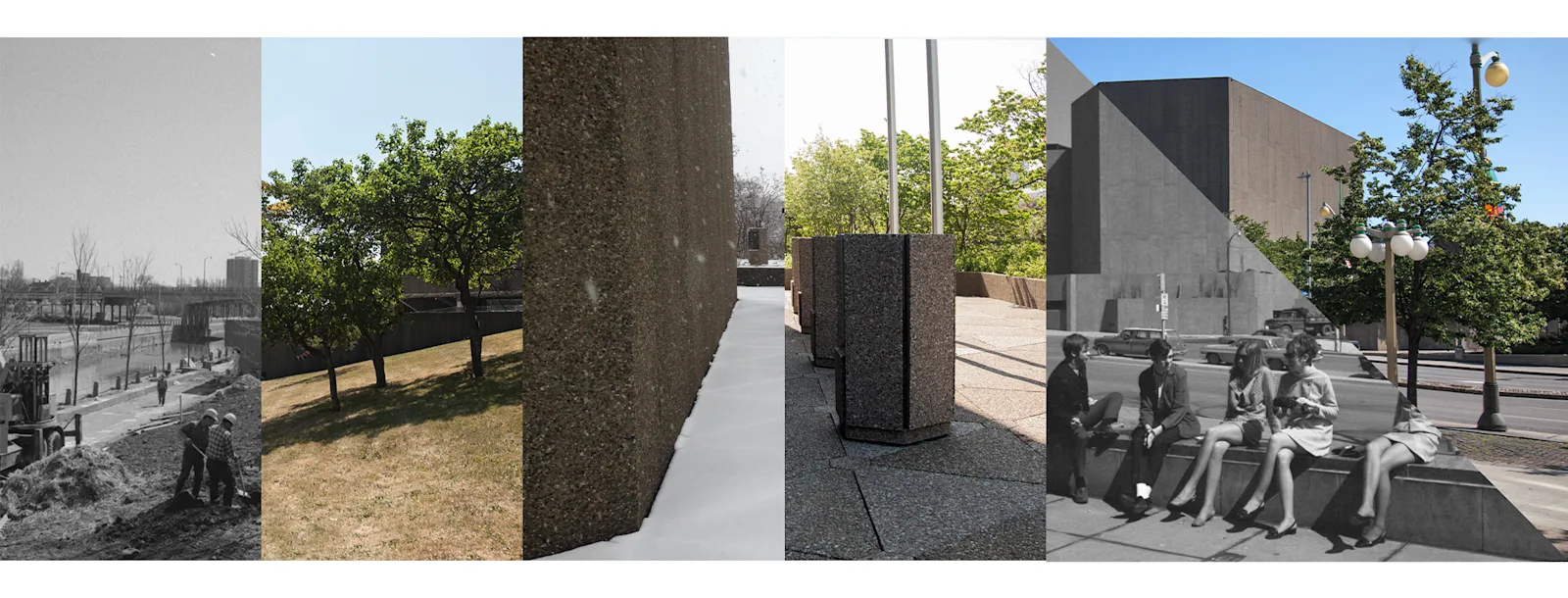 A series of images showing the NAC before and after its rejuvenation in 2017
Working with the Lead Archivist of the NAC, Robert VanderBerg, we planned two documentation sessions. Due to the restrictions enforced by the global pandemic, I needed to organize how we would tackle documenting the building. This included: 1) breaking down each of the building spaces into a priority list, 2) outlining in-house artworks and artifacts we would need access to for photogrammetry, and 3) marking spots in the interior and exterior required for laser scanning, material scanning, and before & after photography.
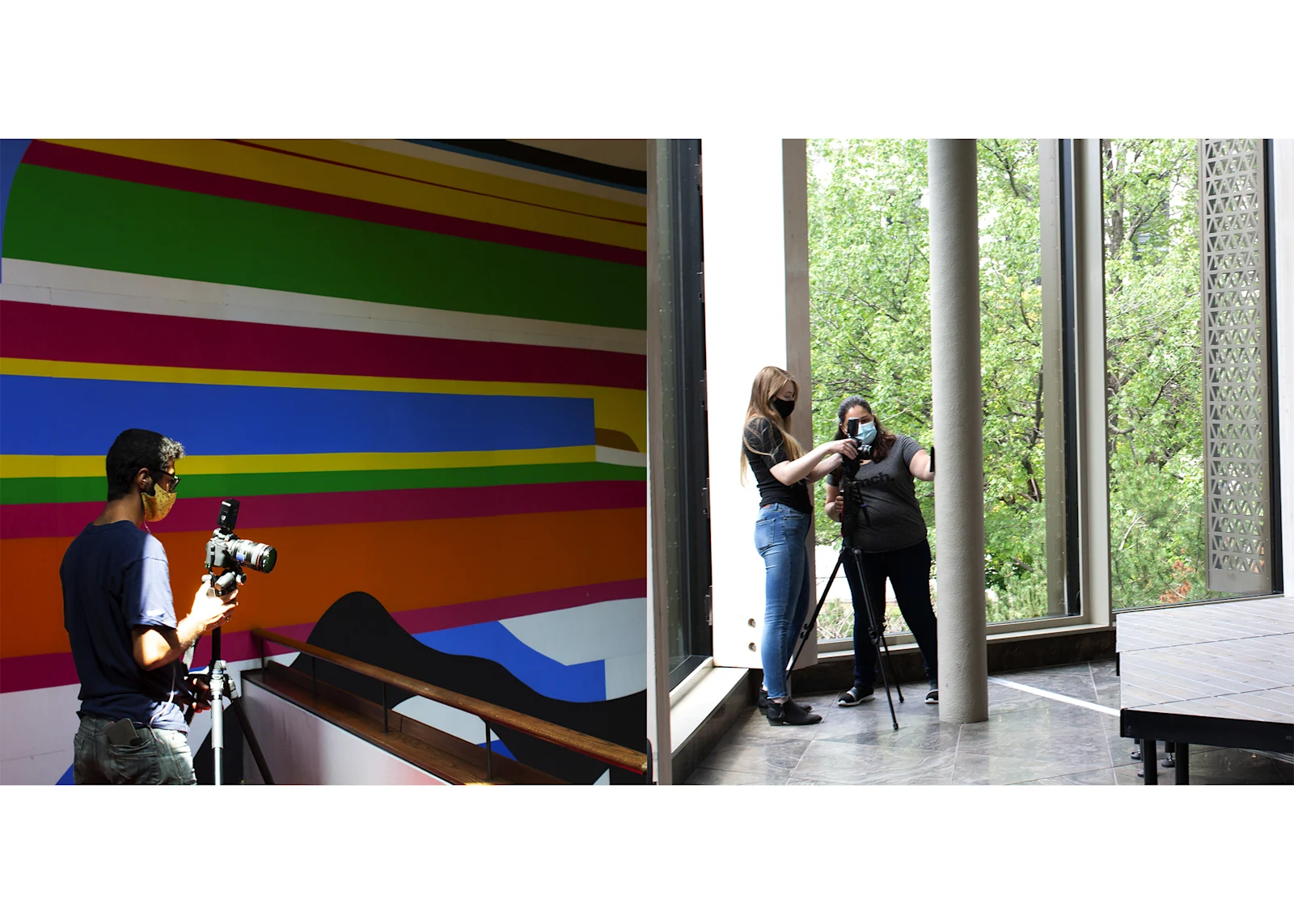 The team documenting the National Arts Centre on-site
Having the entire building empty of patrons gave the team a unique opportunity to capture the interior without the need of working after closing hours. Most of the public spaces were open for the lab to scan, but we needed to book specific times to document the performance halls and theatres. We also had to abide by the social distancing guidelines issued by the province of Ontario which required limited staff and the need to wear a mask indoors.
NAC@50+ hosts a series of partners and co-applicants that have contributed to the overall grant. Diamond Schmitt, the architecture firm responsible for the NAC 50 year rejuvenation project, were kind enough to provide the lab with their building information model of the newly renovated National Arts Centre. Over the summer the team organized and sectioned the building information model (BIM) into several key spaces to use in the overall narrative experience.
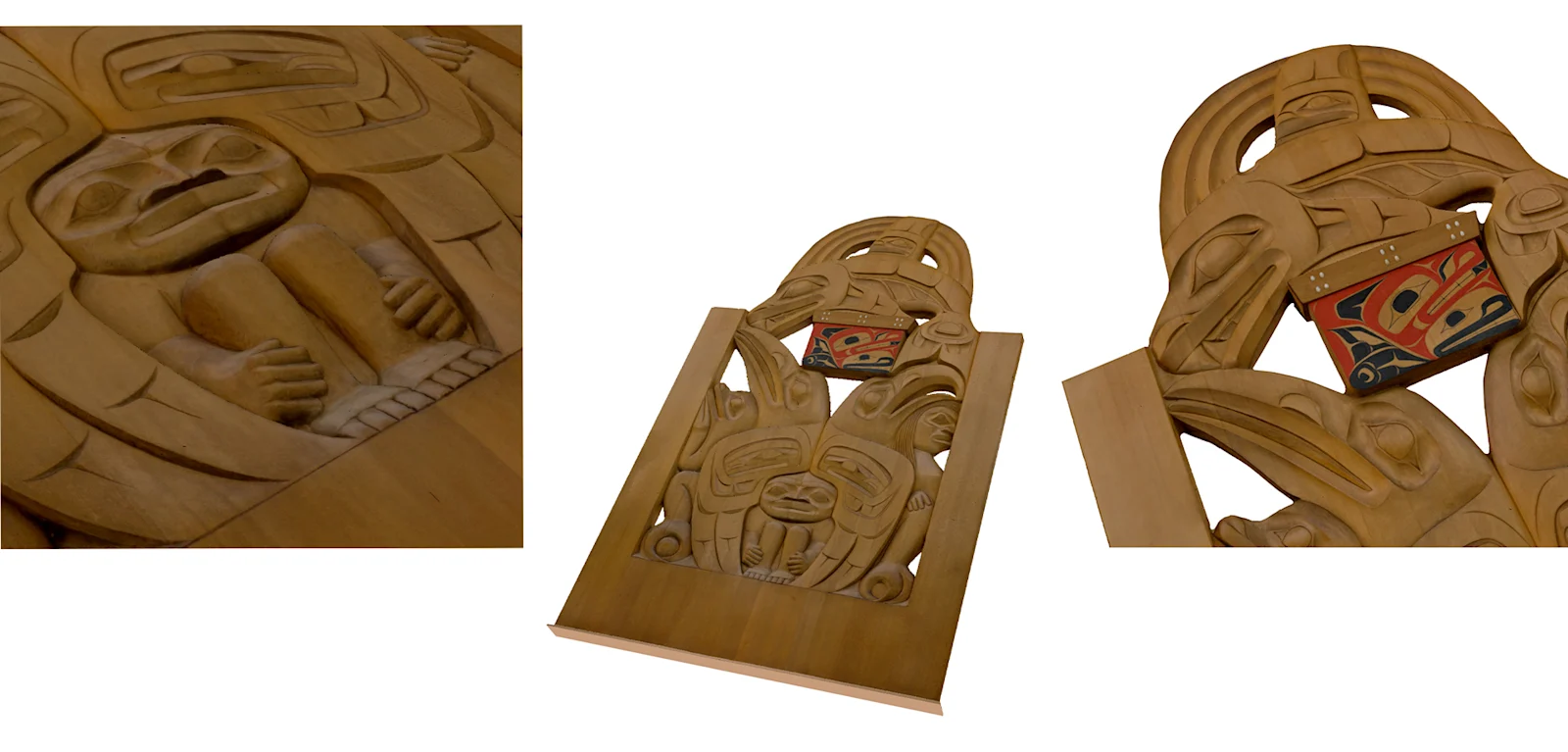 "Clan Unity" by Robert Dempsey – photogrammetric model
Based on the data captured during our two site visits, we’ve processed photogrammetry of several key in-house artworks in the centre. We also started a catalogue of digital materials formed through high definition photography for use in the game engine. Using one of the smaller performance spaces as a test, we brought the BIM into Unreal Engine using a plugin called Datasmith to begin designing the environment for the game. All of this was accomplished with our dedicated team of remote researchers – thank you everyone for your time and effort!
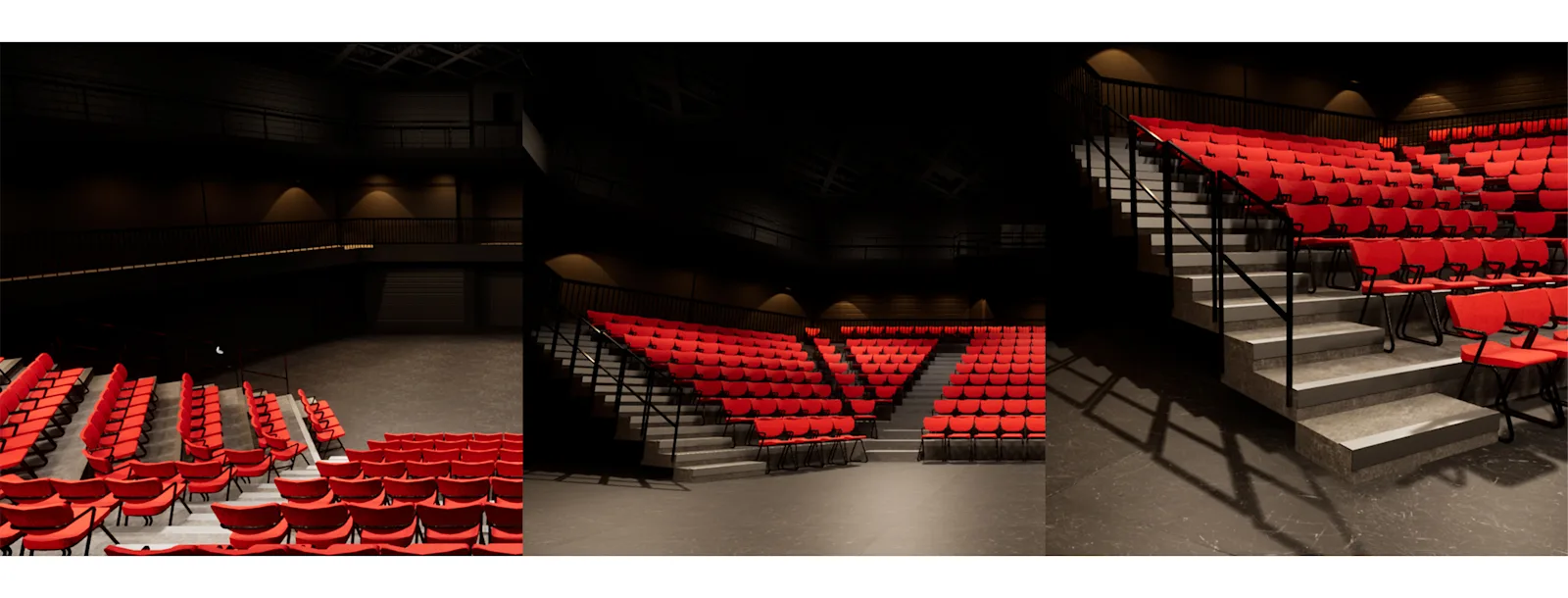 "Azrieli Studio" digital environment built in Unreal Engine