
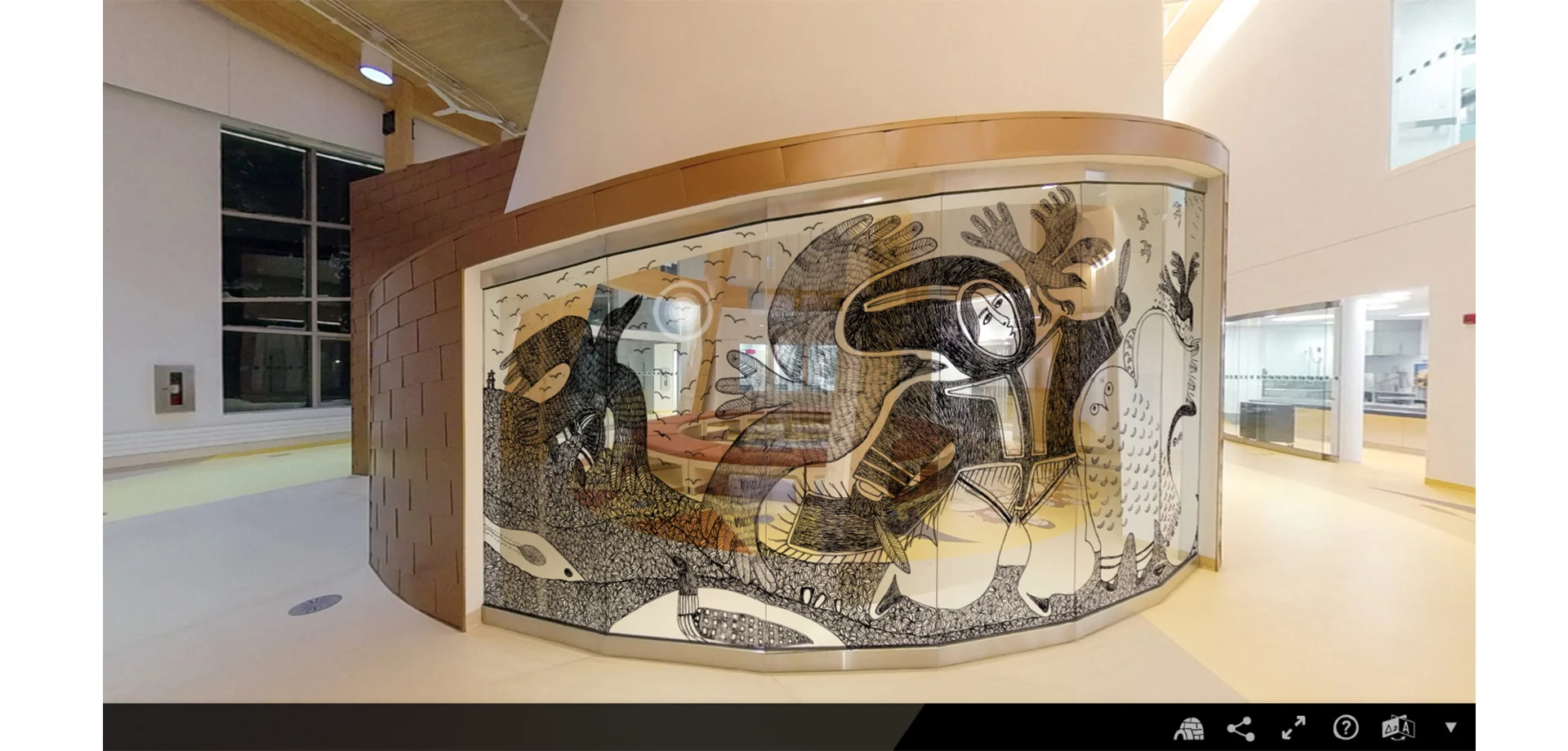
Canadian High Arctic Research Station Virtual Tour
Two summers ago, a virtual tour application was developed by CIMS for the Canadian High Arctic Research Station (CHARS) located in Cambridge Bay, Nunavut. CHARS is both a world-class research facility and community centre that has been designed for both the Arctic climate, and to reflect Northern culture. Due to its remote location, CIMS was brought on to make a virtual tour of the building to showcase it to Canadians and others from across the globe. The CHARS virtual tour features not one or two, but four languages. Responsive design choices had to be made to accommodate for the varying lengths of text.
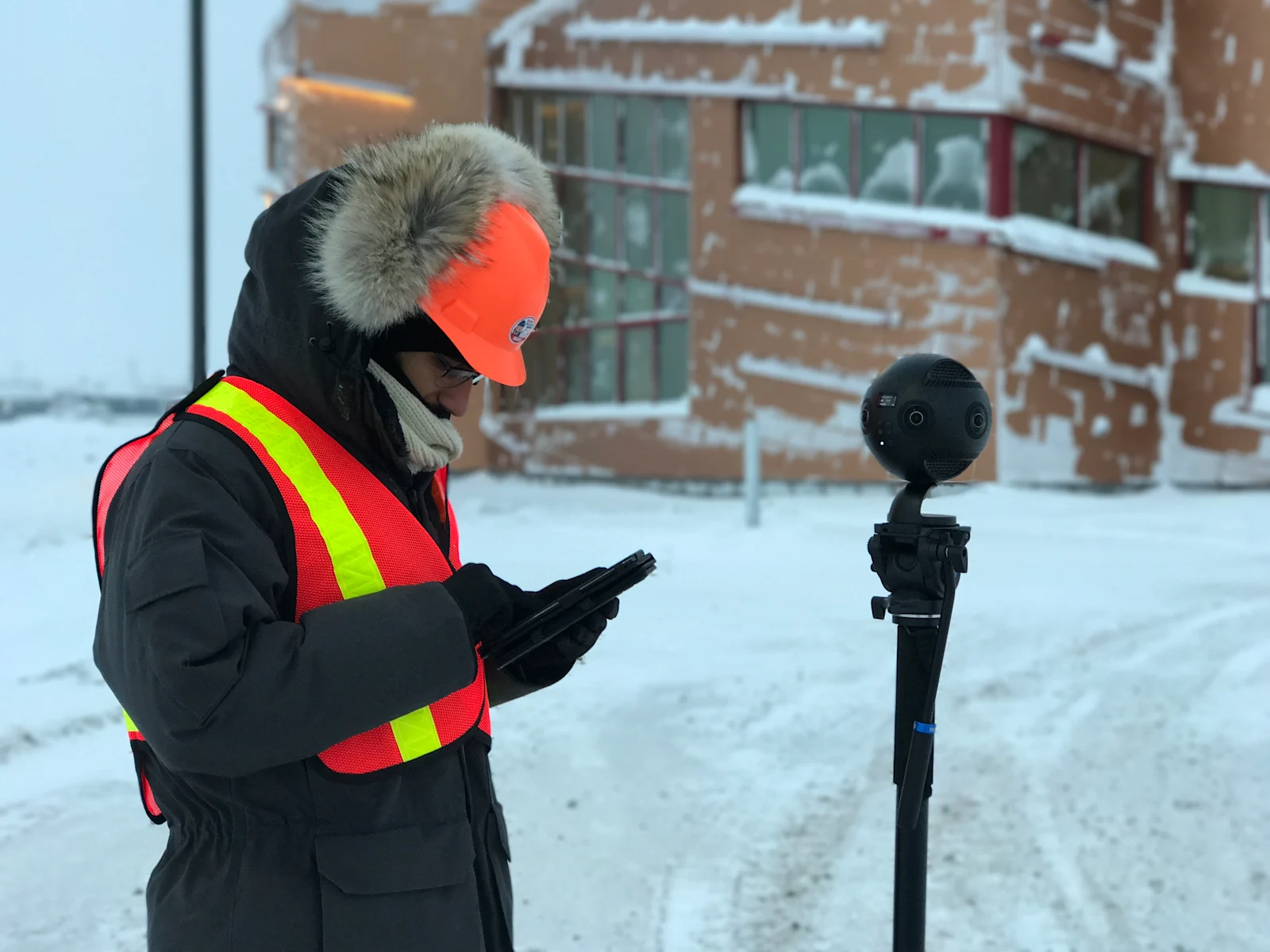
CIMS researchers Abhu Dhanda and Kyle Tousant used several documentation methods to capture the content for the virtual tour. The main layer of the tour is built with 360° panoramas that were created with both an Insta360 Pro camera and a DSLR camera with a fisheye lens and special tripod attachment called a nodal ninja. Photography and photogrammetry were used to highlight significant parts of the building that are featured as hotspots in the virtual tour. Photogrammetry is a technique that combines dozens to hundreds of photos taken around an object and uses it to create a photorealistic 3D model.
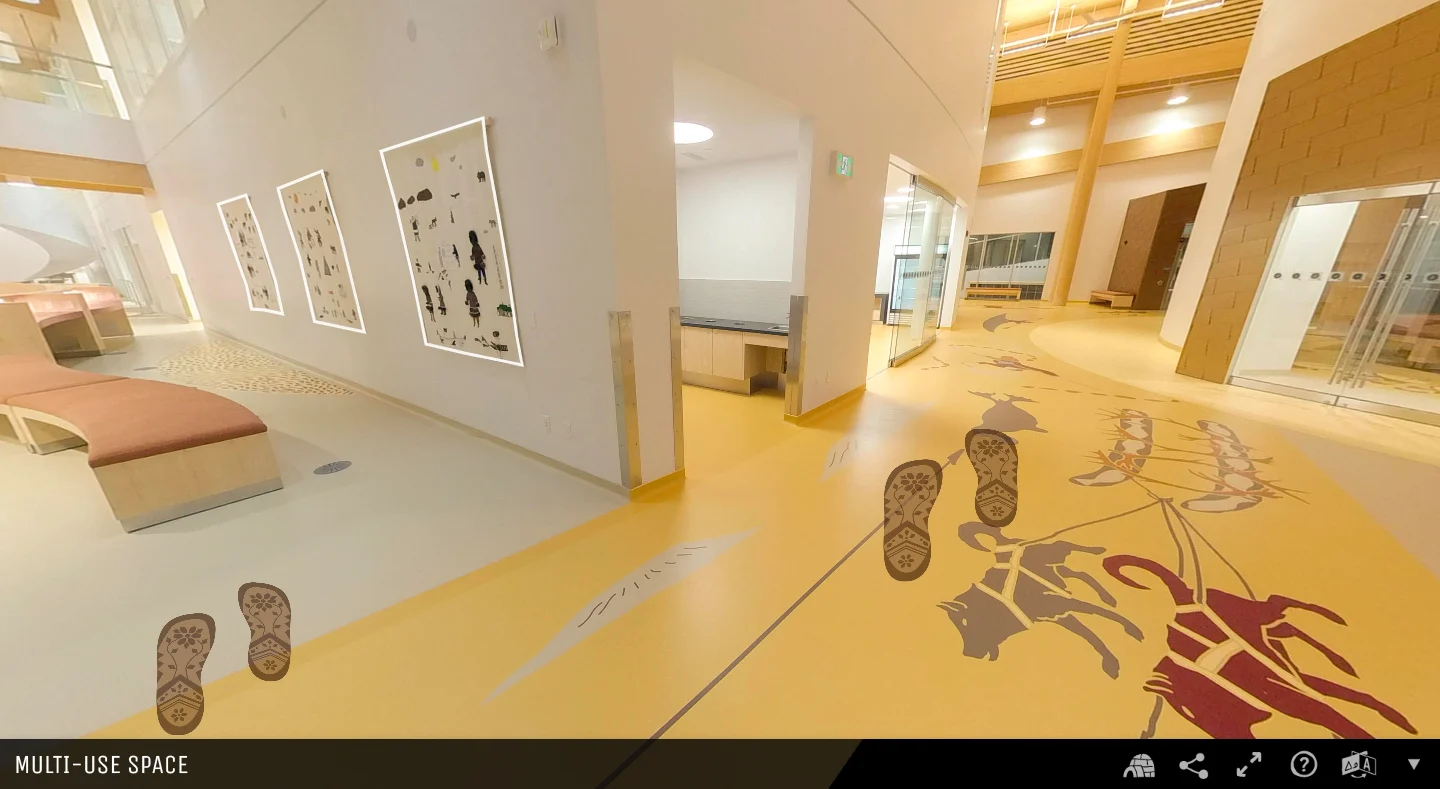
Once all of the photography and documentation was completed, the daunting task remained to compile everything together. The photos had to be stitched into smooth 360° panoramic images linked together by hotspot “footprints”, and in some cases adjustments in Photoshop were required to add missing elements since construction was still underway at the time of capture.
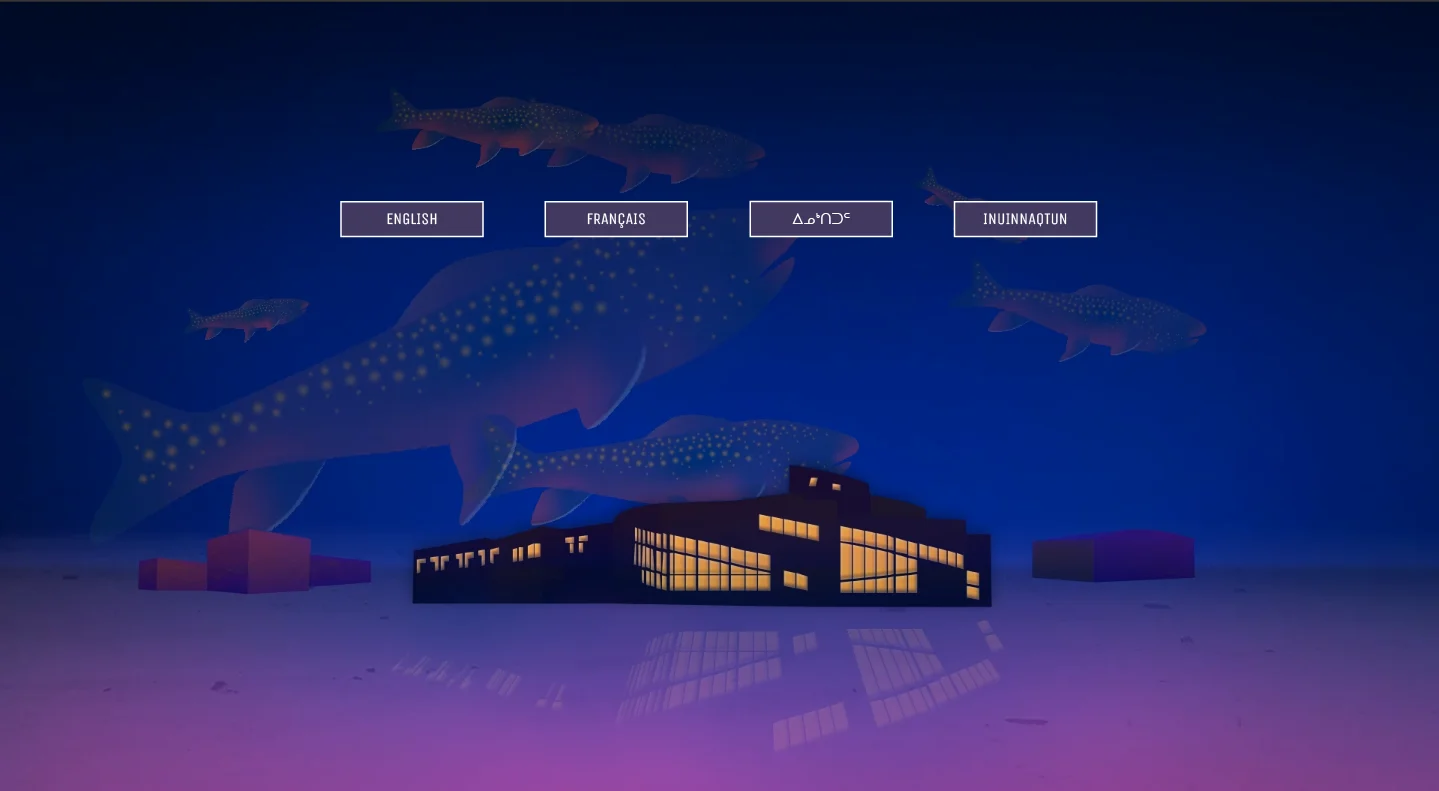
The branding concept involved using the colour scheme provided by CHARS and relating it to visuals that fit with the environment. Given the research station's unique location in the North, we felt that we needed to better understand the people, their research, and the Canadian Arctic community. Did you know that Cambridge Bay is known as Iqaluktuuttiaq in Inuinnaqtun, meaning “good fishing place”? In our research we found that the arctic char fish is native to the Canadian northern coast. This fish, due to its similar name to the research station and chosen colour scheme, was incorporated into the design and can be seen on the home screen.
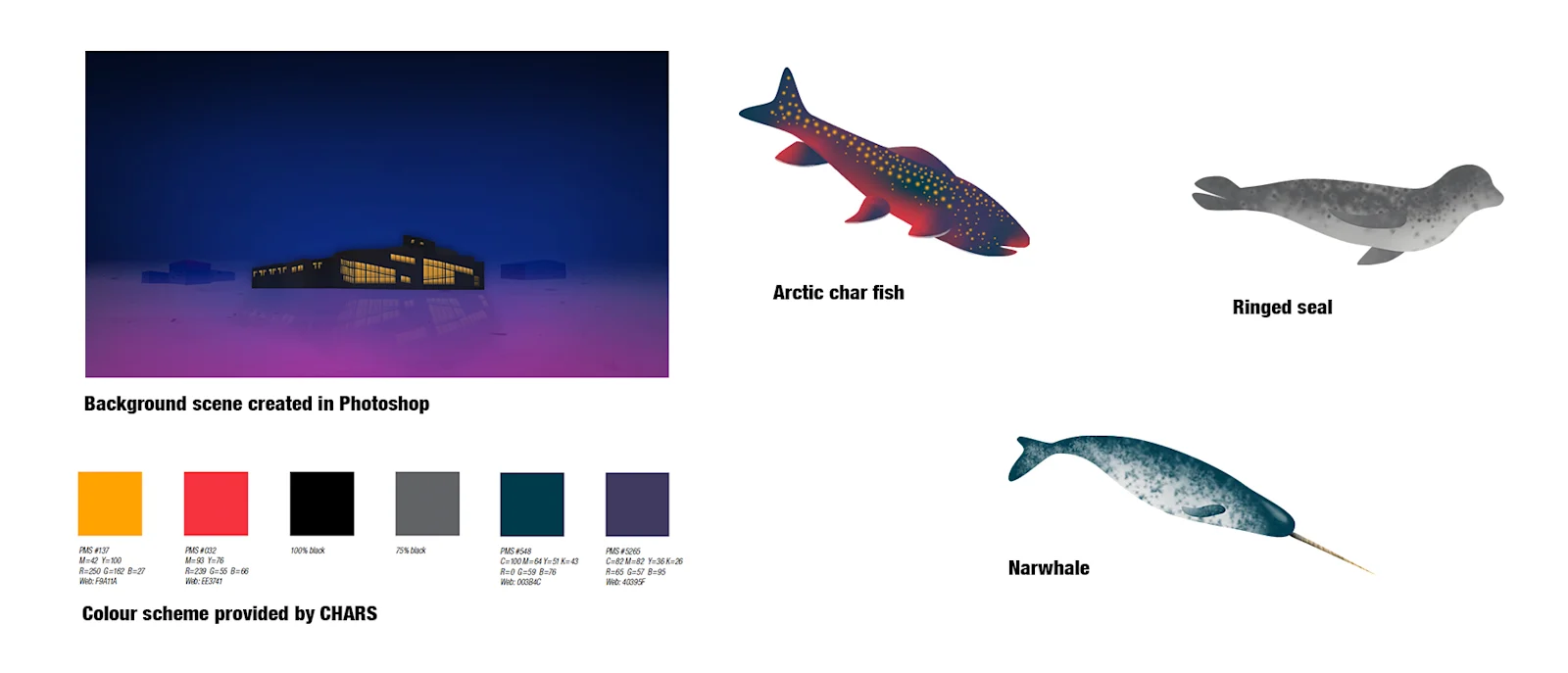
We wanted to incorporate as many elements about Canadian Arctic culture as we could into the design of the user interface. The architecture of CHARS itself was also a source of inspiration. The bold diagonal lines on the building exterior were kept in mind while we were designing the layout of the interface (see the diagonal lines on the bottom black bar). On the other hand, icons were more organic in form to reflect the building’s naturalistic surroundings.
The CHARS virtual tour can be accessed at: https://chars-screa.polarknowledge.ca/